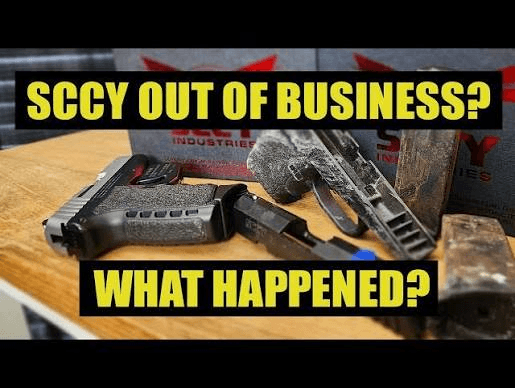
As of 2025, SCCY Industries — once a familiar name in the affordable handgun market — has effectively shut down. Its Daytona Beach facility is permanently closed, its manufacturing equipment has been auctioned off, and the company has no active employees or means of production. For anyone searching for answers about what happened, this article covers the full picture.
We will walk through the tax seizure that triggered the public collapse, the asset auction, the bankruptcy situation, the internal fraud allegations, and what all of this means for people who own a SCCY firearm.
SCCY Is No Longer in Business — Here Is the Current Status
The short answer: yes, SCCY is out of business. This is not a temporary pause or a restructuring in progress. Multiple credible sources confirm the company is done.
Shooting Illustrated, the official journal of the NRA, stated directly that “SCCY is no longer in business.” Google’s business listing for SCCY Industries shows the company as “Permanently closed.” A detailed post-mortem analysis published by Ronin’s Grips concluded that SCCY has no assets, no employees, no equipment, and no viable path to emerge from bankruptcy as a functioning manufacturer.
One small note worth mentioning: SCCY is pronounced “sky.” Online searches and videos sometimes reference “Sky Firearms” — that is the same company, not a different brand.
The Tax Seizure That Triggered the Public Collapse
The event that made SCCY’s financial crisis visible to the public came on March 11, 2025. The Volusia County Tax Collector posted levy and seizure notices at SCCY’s Daytona Beach headquarters for unpaid tangible personal property taxes totaling approximately $249,932.
By April 11, 2025, the “pending levy and seizure” notice was still posted on the company’s front door. The tax collector’s office indicated it planned to recover the owed funds through a bank levy or by inventorying and seizing whatever physical assets remained at the facility.
Think of a tax seizure like a government-issued foreclosure. Once authorities claim and auction off a manufacturer’s core equipment and assets, the company may still exist on paper — but it cannot build anything. That is precisely what happened to SCCY. Legally incorporated or not, a factory stripped of its machinery is no longer a factory.
Asset Auction, Bankruptcy Filings, and the Wind-Down Process
Following the seizure, SCCY’s manufacturing assets were scheduled for sale through Prestige Auction, with auction dates set for June 24–26, 2025. The items listed for sale give a clear picture of what was inside that Daytona Beach facility: CNC machines, robodrills, injection molding machines, lathes, 3D printers, and general office equipment. In short, everything needed to make a firearm.
Reports also indicate that SCCY filed for bankruptcy at some point during this process. Some coverage noted that the court authorized limited business operations while proceedings were ongoing, which is a standard arrangement called debtor-in-possession status. This allows a company to keep some lights on while bankruptcy plays out.
There are two main types of business bankruptcy worth understanding here. Chapter 11 is a reorganization — the company restructures its debts and tries to keep operating. Chapter 7 is liquidation — assets are sold off and the company closes entirely. Based on available reporting, including the Ronin’s Grips post-mortem, SCCY’s trajectory points firmly toward full liquidation rather than any meaningful reorganization. Exact legal outcomes should be verified through court records as proceedings conclude, but no credible source has suggested a path back to production.
It is also worth noting that some early reports stated SCCY had not yet filed for bankruptcy at certain points in time. This reflects the messy, fast-moving nature of the situation and inconsistent reporting timelines — not necessarily a contradiction.
Internal Fraud Allegations and Quality Problems Made Recovery Unlikely
The tax seizure was the most visible crisis, but SCCY was already weakened before that notice went up on the door.
Alleged Fraud by a Former Executive
SCCY became entangled in litigation against its former COO, Beau Hickman. The company alleged that Hickman had submitted falsified expense reports, misappropriated company assets, and operated a scheme to divert roughly $150,000 through a fraudulent marketing entity. These are allegations tied to ongoing litigation, not confirmed court verdicts, but the legal dispute itself drained time, money, and management attention from a company that could not afford the distraction.
Internal fraud of this kind is damaging in two ways. It creates direct financial losses. And it signals to suppliers, partners, and lenders that internal controls have failed — which makes outside support harder to secure at exactly the moment it is needed most.
A Reputation Built on Reliability Problems
SCCY built its customer base on price. The company’s CPX series 9mm pistols were among the most affordable handguns on the market, which attracted budget-conscious buyers. But affordability only sustains a business if the product holds up.
Over time, reports from owners and former employees described persistent reliability problems — failures to feed, failures to go into battery, and high overall malfunction rates. Comments from former employees surfaced in local community discussions, pointing to mismanagement and quality control issues inside the facility.
Reliability problems in the firearms market are particularly damaging. Buyers in this space rely on their purchases for personal safety. When word spreads that a gun misfires regularly, it does not just affect one sale — it affects the entire brand. SCCY was competing in a crowded budget category alongside brands like Taurus, Hi-Point, and Ruger’s entry-level offerings. Without quality to back up its pricing, the company had little left to differentiate itself.
What SCCY’s Closure Means for Current Owners
If you own a SCCY pistol, your firearm is still legal to own and use. Closure of the manufacturer does not affect the legal status of firearms already in circulation. But there are practical consequences worth understanding.
- Warranty support is gone. SCCY can no longer honor any warranty claims. There is no company left to send a firearm back to for factory service.
- OEM parts availability is uncertain. With manufacturing equipment auctioned off and no active production, sourcing original parts will become progressively harder. Independent gunsmiths and aftermarket suppliers may be able to help with some repairs, but factory components will not be restocked.
- Resale value may drop. Used SCCY pistols are likely to decline in secondary market value. Buyers generally discount firearms from defunct manufacturers due to the absence of support, parts availability, and brand credibility.
- Dealers may discount remaining inventory. Gun shops that carried SCCY as a budget option may reduce prices on remaining stock to move it, given customer uncertainty about long-term support.
A practical example: a SCCY CPX-2 owner who experiences a feeding issue today has no factory repair option. Their path forward is an independent gunsmith — which may work fine, but it is a different situation than what was originally promised at the point of sale.
What This Case Reveals About Small Manufacturers
SCCY’s collapse did not happen because of one bad decision. It was the result of several compounding problems: thin margins in a competitive market, quality issues that eroded customer confidence, internal fraud that drained resources, and ultimately a failure to stay current on tax obligations. Any one of these problems is manageable in isolation. Together, they were not.
SCCY also did not collapse in a vacuum. The U.S. firearms industry in 2025 has faced broader financial stress, with other manufacturers and ammunition producers also filing for bankruptcy or shutting down. Specialty Cartridge Inc., which operated under the Atlanta Arms brand, filed for Chapter 11 bankruptcy protection in May 2025. Smaller companies with limited cash reserves and narrow market positions are particularly exposed when market conditions tighten.
For business observers, the SCCY case is a useful study in how tax non-compliance can accelerate a collapse. Unpaid taxes of roughly $250,000 may not sound catastrophic for a manufacturing operation — but once government authorities post levy notices and begin seizing equipment, the situation moves quickly. There is very little room to negotiate when core production assets are being carted out the door.
Readers interested in business risk and financial management across industries will find broader coverage and analysis at InPageBusiness, which covers topics relevant to business owners navigating similar pressures.
Could Another Company Acquire the SCCY Brand?
It is worth addressing a common question: could another firearms manufacturer buy the SCCY name or designs and restart production? In theory, yes. Brand acquisitions happen in the firearms industry. Remington’s brand and certain assets were acquired after its bankruptcy, for example.
However, as of the latest available reporting, no credible business news source has confirmed any acquisition of SCCY’s brand, intellectual property, or product designs. Until such a development is confirmed by authoritative sources, treat SCCY’s closure as final. Speculation about a potential buyer should not be confused with an announced deal.
Final Takeaway
SCCY Industries is, for all practical purposes, finished. The tax seizure in March 2025 made the situation public, the asset auction in June 2025 stripped the company of the tools needed to produce firearms, and no credible path to revival has emerged. Owners of SCCY pistols retain their legal property but should expect no factory support going forward.
Read This: