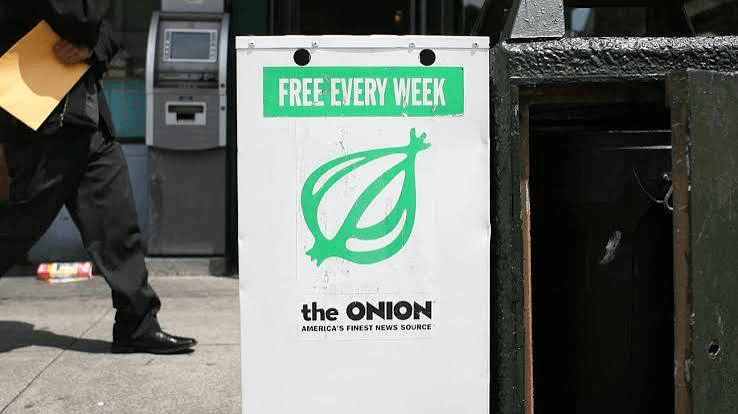
The question comes up regularly online, and it is easy to see why. Headlines about The Onion shutting down, losing print editions, or changing hands have been circulating for years. But most of those conversations are mixing up three very different things: the end of its print editions, several ownership transfers, and occasional shutdown rumors that were never grounded in fact.
This article looks at what actually happened. Is The Onion still operating? What happened to its print editions? Who owns it now? And what do its most recent business moves say about where it stands today?
The Onion Is Not Closing — Here Is What Is Actually Happening
The short answer is no — The Onion is not going out of business. The publication is still active, still publishing, and still operating as a recognizable media brand.
The confusion comes from treating three separate events as if they were one story. The end of its print editions, a series of ownership changes, and occasional satirical headlines have all been bundled together in ways that make the situation look worse than it is.
It helps to draw a clear line here. Cutting a product line is not the same as shutting down a business. A newspaper that ends its print run but keeps its website running has changed its format — it has not gone out of business. The same logic applies to The Onion. Its print editions ended, but the brand and the digital operation continued without interruption.
No credible reporting supports the claim that The Onion has fully shut down or ceased operations as an organization.
When The Onion Ended Its Print Editions
This is where the “going out of business” story usually begins, and it is worth getting the timeline right.
In 2008, The Onion ended its print operations in San Francisco and Los Angeles. At the time, the company confirmed it had no immediate plans to discontinue print in its other markets. This was a targeted cut, not a sign that the whole operation was collapsing.
By 2013, the remaining print editions — including those in Chicago, Milwaukee, and Providence — were discontinued. The publication moved fully digital at that point. Its final print issues ran in December of that year, confirmed by local reporting in those markets.
This was a business decision driven by industry-wide trends. Print advertising had been declining steadily across the media sector for years. The Onion was not uniquely in distress — it was responding to the same pressures that pushed dozens of other publications toward digital-only models.
The digital operation stayed intact. Content continued to be published. The brand did not disappear. Ending a print edition is a product-line cut, not a shutdown.
The Ownership History Behind the Headlines
Another major source of confusion is the number of times The Onion has changed hands. Ownership transfers can sound alarming, but they are routine in media. A brand being sold does not mean it is being closed.
Over its history, The Onion has passed through several corporate owners, including Great Hill Partners and G/O Media. Each transition changed who controlled the business, but the publication kept operating through all of them.
The most recent and significant transfer happened in April 2024. G/O Media sold The Onion to a Chicago-based firm called Global Tetrahedron. The New York Times reported the transaction, and Variety confirmed the details of the new leadership structure.
Global Tetrahedron was created by Jeff Lawson, who previously served as CEO of Twilio, the cloud communications company. Lawson’s background is in technology and entrepreneurship — not media liquidation. Ben Collins, a former reporter at NBC News who had covered disinformation extensively, was appointed as the new CEO of The Onion following the sale.
This combination of a tech-sector founder and a journalism-focused executive suggested a publication being repositioned, not wound down. A brand that survives across multiple corporate transitions is demonstrating resilience, not fragility.
What the 2024 Sale Meant for The Onion’s Direction
The Global Tetrahedron acquisition was a meaningful shift in how The Onion would be operated and positioned. Before the sale, the publication sat within G/O Media, a large digital media conglomerate that also managed several other editorial properties. Moving to an independent, purpose-built firm changed the ownership context significantly.
Jeff Lawson’s involvement pointed toward an owner with genuine investment intent. Founders who build holding companies to acquire media brands are typically interested in growth or repositioning, not quiet shutdowns. And the appointment of Ben Collins — known specifically for his work covering misinformation — suggested an editorial identity that was being sharpened rather than abandoned.
There is an important distinction worth making here. A media transaction only signals closure when assets are being dissolved or liquidated. When assets are transferred to a new owner with an active leadership team, that is a sale — not an ending. Everything reported about the 2024 event points to the latter.
The Infowars Bid and What It Reveals About The Onion’s Current Activity
Perhaps the clearest evidence that The Onion remained active and business-oriented after its 2024 sale came in 2026, when the publication reached an agreement to acquire Infowars out of bankruptcy proceedings. NPR reported on the deal, which was a high-profile and widely covered media story.
An organization that is quietly dying does not pursue major acquisitions. The Infowars bid demonstrated that The Onion’s leadership was actively engaged in shaping the brand’s footprint and looking for ways to expand its reach.
That said, the deal was not completed. A bankruptcy judge ultimately rejected the purchase, so The Onion did not acquire Infowars. But the attempt itself is still meaningful as a signal. It shows an organization with enough resources, legal capacity, and ambition to enter a competitive acquisition process — not one that is winding down.
For readers who follow business news, this kind of move is worth understanding in context. As covered on InPageBusiness, media companies regularly pursue acquisitions as part of broader positioning strategies, even when those deals ultimately fall through. The value of the attempt is in what it reveals about organizational intent.
Why the Shutdown Rumor Keeps Circulating
It is worth addressing why this question keeps coming up. There are a few reasons the “Is The Onion closing?” story has legs.
- The print closure in 2013 was real and widely reported. Readers who remember that news sometimes assume it meant the publication shut down entirely.
- Ownership changes can look like instability from the outside, even when they represent normal business activity.
- Satire creates confusion. The Onion publishes fictional news. Occasionally, headlines that appear to be about the publication itself get circulated as if they were factual reporting.
- Outdated search results surface old print-closure articles when readers search for current information, making past events appear recent.
None of these factors point to an actual shutdown. They point to a publication with a complicated public history that has not always been clearly explained.
What the Record Actually Shows
Taken together, the facts tell a straightforward story. The Onion ended its print editions in stages between 2008 and 2013, driven by the same industry pressures that reshaped print media broadly. It continued as a digital publication throughout. It changed ownership several times, most recently in April 2024 when Global Tetrahedron acquired it from G/O Media. Its new leadership included a technology entrepreneur and a veteran journalist. And in 2026, it actively pursued a major media acquisition — even though the deal was ultimately blocked.
None of that is the record of a publication going out of business. It is the record of a media brand navigating a difficult industry through format changes, ownership transitions, and strategic repositioning.
The Onion is still publishing. It still has an operational leadership team. And it has demonstrated enough organizational ambition to pursue headline-making business moves. That is not what shutdown looks like.
If you saw a headline suggesting otherwise, it was likely either outdated, mischaracterized, or — given the source — possibly satire.
Read This: