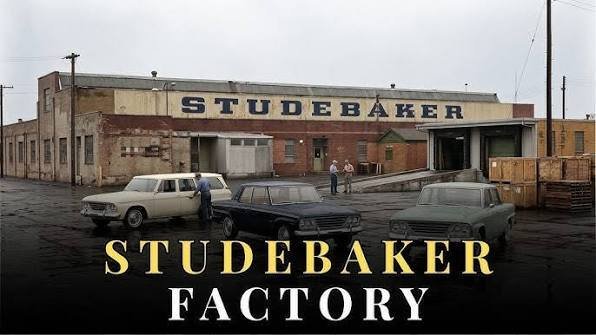
If you have searched “Is Studebaker going out of business?” recently, you are not alone — and the answer is more layered than a simple yes or no. The truth depends entirely on which version of Studebaker you mean: the original American automaker or a modern effort using its name.
This article will walk you through when and why Studebaker left the car business, what happened to the brand afterward, and how to think clearly about the revival claims you may have seen online.
Studebaker Already Left the Auto Business — Decades Ago
Here is the foundational fact: Studebaker’s automotive manufacturing operations did not close recently. They shut down in the 1960s.
The last Studebaker automobile rolled off an assembly line on March 4, 1966, in Hamilton, Ontario, Canada. That was the end of Studebaker as a car manufacturer. It was not a quiet exit either. Time magazine covered the announcement directly, describing the company as “going out of the auto business” and noting that Studebaker had decided to shut its Canadian motorcar assembly lines for good.
One key reason for the decision: cars had actually become one of the least profitable parts of Studebaker’s business compared to its other divisions. The numbers made it hard to justify continuing vehicle production.
So when people ask today whether Studebaker is “going out of business,” the historical answer is that it already did — more than fifty years ago.
How a 19th-Century Wagon Maker Became One of America’s Most Recognized Independent Automakers
To understand why Studebaker’s closure matters, it helps to know where the company came from.
Studebaker started out making wagons in the 19th century — long before the automobile existed. As the market shifted, so did the company. By the early 20th century, Studebaker had transitioned into car manufacturing and eventually grew into one of the most recognized independent automakers in the United States.
That placed it in direct competition with the so-called Big Three: General Motors, Ford, and Chrysler. For an independent manufacturer, that was a difficult position to hold for long.
In the 1950s, Studebaker merged with Packard in an effort to survive the competitive pressure. The combined entity became the Studebaker-Packard Corporation. The hope was that merging two independent brands would create enough scale and financial strength to compete more effectively.
It did not work out that way. The Packard marque was retired in 1959. By 1962, the word “Packard” was dropped from the corporate name entirely — around the same time the Studebaker Avanti was introduced. The corporation had failed to generate the synergies it needed, and Studebaker continued on alone until its final car rolled out in 1966.
Why Studebaker Could Not Compete With the Big Three
The reasons behind Studebaker’s collapse are not complicated, but they are instructive.
The most fundamental problem was scale. GM, Ford, and Chrysler had far more plants, more capital, and far greater purchasing power. That meant they could build cars more efficiently and price them more competitively. Studebaker, operating at a fraction of the volume, could not match that.
On top of the scale gap, Studebaker’s manufacturing facilities were outdated. Modernizing them would have required significant capital investment — capital the company did not have in sufficient quantity. Labor costs and pricing pressures added further strain to margins that were already thin on lower-volume vehicles.
The Studebaker-Packard merger was meant to solve some of these problems through consolidation. But the synergies that looked good on paper never materialized at the scale required. Two struggling independents combining does not automatically produce one strong competitor.
A useful parallel: imagine a small smartphone manufacturer trying to go head-to-head with Apple and Samsung on price, distribution reach, and research investment. Without a distinct niche or deep financial backing, that is an extraordinarily difficult position to maintain. Studebaker faced a structurally similar challenge in the automobile market of the mid-20th century.
The Difference Between a Company Closing and a Brand Surviving
Here is where the confusion often starts for people searching this topic today.
Studebaker exited automobile manufacturing specifically. That is distinct from saying the corporate entity or the brand name simply vanished. Remnants of the Studebaker-Packard corporate structure continued operating in other business lines for a period after the factories closed. The brand name and associated trademarks also persisted beyond the closure of production.
This distinction — between a name surviving and a company actively building cars — is what creates the confusion when people encounter “Studebaker” in modern contexts.
Other automotive brands offer useful reference points. The Packard name was retired entirely as a car marque. Pontiac was discontinued by General Motors in 2010 after more than a century of production. DeLorean produced cars briefly in the early 1980s before closing. In each case, the brand name outlived actual production, sometimes by decades.
Studebaker fits that pattern. The name did not disappear, but the manufacturing operation did.
What Modern “Studebaker Revival” Plans Actually Represent
If you have seen recent articles or videos suggesting Studebaker is making a comeback, those references are not about the original manufacturer resuming operations. They describe a separate corporate effort using the Studebaker brand name.
According to reporting from Drive.com.au, a company led by Studebaker president and CEO RW Reed has outlined a phased comeback strategy. The plan begins with Phase 1: petrol and electric scooters, starting with smaller-engined models as an entry point. Later phases envision reintroducing the Studebaker Lark, targeting 20,000 annual units at full scale, followed by the Hawk, President, Champ, and a new model called the Avonaco. The long-term vision reportedly includes a potential public listing if the venture succeeds.
This is a genuine business announcement — but it is a new corporate effort using a historic brand name, not the original 20th-century manufacturer returning to production. Those are meaningfully different things, and the distinction matters when evaluating credibility.
It bears resemblance to other brand revivals in the industry. Indian Motorcycle, MINI, and Maybach were all dormant or discontinued before being relaunched under new ownership. The strategy of pairing a respected historic name with a new business structure is a recognized approach — but execution, funding, and market demand ultimately determine whether it works.
How to Evaluate “New Studebaker” Content Online
You may also have encountered videos describing vehicles like the “2026 Studebaker Commander” — complete with turbocharged engines, an all-electric version, claimed ranges of 350 miles, and pricing starting around $42,900. Some of this content includes details about warranties and owner apps.
Treat this type of content carefully. Inpagebusiness and other business-focused outlets consistently advise readers to distinguish between verified corporate announcements and speculative or concept-based media. A detailed video or article about a “new Studebaker model” is not, by itself, confirmation that a major automaker has resumed mass production. Without corroboration from established industry news sources or official filings, such content is better understood as conceptual or promotional in nature.
A practical comparison: design studios and fan communities regularly produce highly detailed concepts of what a modern DeLorean or a revived classic muscle car might look like. Those concepts are interesting, but they are not production schedules.
When evaluating any claim that Studebaker — or any dormant brand — is “back,” look for official corporate registrations, mainstream automotive industry coverage, confirmed manufacturing partnerships, and verifiable product timelines. Marketing language and concept videos should not be the primary basis for that assessment.
What Studebaker’s History Teaches About Business Competition
Studebaker’s story is used in business education for good reason. It illustrates what happens when a company faces a structural competitive disadvantage and lacks the capital or strategic clarity to address it.
The core lessons are straightforward. Scale matters enormously in capital-intensive industries. Outdated infrastructure is a serious liability when competitors are investing heavily in modern facilities. And mergers that look logical on paper can fail to deliver if the underlying businesses are both struggling from similar weaknesses.
The Studebaker-Packard combination brought two brands together, but it did not produce the cost savings or market strength either needed. That outcome is a reminder that consolidation is a strategy, not a guaranteed solution.
The Bottom Line on Studebaker
Studebaker’s original automotive manufacturing business ended on March 4, 1966. The company that built wagons in the 19th century, became a respected independent automaker, and ultimately could not compete with the scale of the Big Three ceased producing cars more than five decades ago.
The brand name survived in various forms, and a modern revival effort does appear to be underway — beginning with scooters and aiming toward car production over time. Whether that effort succeeds is an open question. It is a new venture, not a continuation of the historic company.
If you are researching Studebaker to understand what happened to it, the answer is clear: it already exited the automobile business long ago. If you are evaluating modern Studebaker revival claims, apply the same scrutiny you would to any early-stage automotive venture entering a competitive and capital-intensive market.
Read This: