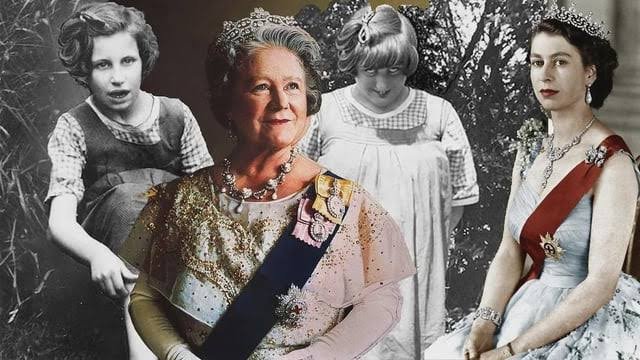
Most people who search for Violet Bowes-Lyon are trying to confirm one thing — that she was the older sister of Elizabeth Bowes-Lyon, the woman who became Queen Elizabeth The Queen Mother. That is correct. But the full picture behind that connection is worth understanding properly.
Violet never had a public life. She died at the age of eleven and left no adult record behind. What she does have is a clear and documented place in a family that later became central to British royal history. This article covers who she was, who her parents were, where she fits among her siblings, why records about her are limited, and what title — if any — she actually held.
Who Was Violet Bowes-Lyon
Her full name was Violet Hyacinth Bowes-Lyon. She was born on 17 April 1882 and died on 17 October 1893. She was eleven years old when she died.
Violet was not a working royal, not a princess, and not a public figure of any kind. She was the eldest child of an aristocratic Scottish family at a time when that family had no direct connection to the monarchy. Her significance today is purely genealogical — she appears in royal family trees because her younger sister Elizabeth later married a man who became King of England.
It is worth using her full name and dates when identifying her. This helps distinguish her from other members of the broader Bowes and Lyon family lines, which appear frequently in genealogy records.
Her Parents and the Bowes-Lyon Family
Violet’s father was Claude George Bowes-Lyon. He later became the 14th Earl of Strathmore and Kinghorne, though he did not inherit that title until after Violet had already died. Her mother was Cecilia Nina Cavendish-Bentinck, who became Countess of Strathmore and Kinghorne once Claude inherited the earldom.
The Bowes-Lyon family had deep Scottish aristocratic roots. They were a well-established noble family, but at the time of Violet’s birth, they had no connection to the British royal family. That connection only came decades later, when Violet’s younger sister Elizabeth married Prince Albert, Duke of York.
Claude and Cecilia were married in 1881, and Violet was their first child. The family eventually grew to ten children, living primarily between their Scottish estate, Glamis Castle, and their English home, St Paul’s Walden Bury in Hertfordshire.
Violet Among Ten Siblings
Violet was the eldest of ten children born to Claude and Cecilia. Her siblings, in order, were Mary, Patrick, John, Alexander, Fergus, Rose, Michael, Elizabeth, and David.
Patrick, the next eldest after Violet, later inherited the title and became the 15th Earl of Strathmore and Kinghorne. He was the one who carried the family earldom forward after their father.
Elizabeth was born in 1900 — seven years after Violet died. This is an important detail. Violet and Elizabeth never met. They were sisters only in the sense of sharing the same parents. Violet had no personal relationship with the woman who would eventually become the Queen Mother, because she did not live to see Elizabeth born.
Elizabeth Bowes-Lyon went on to marry Prince Albert in 1923. When Albert became King George VI in 1936, Elizabeth became Queen Consort. After the King’s death in 1952, she was known as Queen Elizabeth The Queen Mother until her own death in 2002. That is the life path that makes Violet historically notable — not anything Violet did herself, but what her youngest sister became.
Her Death and Why Records Are Limited
Violet died from diphtheria on 17 October 1893. Diphtheria was a serious and often fatal bacterial infection in the nineteenth century, particularly among children. She was buried at St Andrew’s Church, Ham.
Because she died so young, there is almost nothing in the public record beyond her birth, death, and family placement. She never married. She had no children. She held no public role and left no professional legacy. Genealogy databases mention her only because of who her family was, not because of any independent accomplishment.
Some online family-tree entries about Violet may contain small errors. User-submitted genealogy profiles are not always verified against primary archival sources, and naming conventions can vary across different databases. For the most reliable version of her record, the confirmed facts are simple: born 17 April 1882, died 17 October 1893, eldest child of Claude and Cecilia Bowes-Lyon, buried at St Andrew’s Church, Ham.
Was She Ever Called “Lady Violet”
This is a question that comes up in genealogy research, and it has a straightforward answer. Violet’s father did not become the 14th Earl of Strathmore and Kinghorne until after her death. During her lifetime, Claude had not yet inherited the earldom.
In British aristocratic convention, the daughters of an earl are styled “Lady” followed by their first name. But if the father is not yet an earl, that styling does not apply. Because Violet died before her father inherited the title, she was not formally styled “Lady Violet” during her lifetime.
Modern family-tree entries sometimes use “Lady Violet Hyacinth Bowes-Lyon” as a way of signalling her aristocratic background or connecting her to the later family title. That usage is retroactive and informal. It was not her actual title at the time of her death. Readers who see this styling in genealogy databases should understand the distinction.
Her Relationship to Queen Elizabeth II and King Charles III
Understanding Violet’s place in the family tree is straightforward once you know the basic relationships.
- Claude Bowes-Lyon and Cecilia Cavendish-Bentinck were Violet’s parents.
- Their daughter Elizabeth Bowes-Lyon became the Queen Mother.
- The Queen Mother’s daughter was Queen Elizabeth II.
- Queen Elizabeth II’s son is King Charles III.
That makes Violet an aunt of Queen Elizabeth II and a great-aunt of King Charles III. She sits one generation above Elizabeth II and two generations above Charles III in the family tree. Those relationships exist on paper through shared ancestry, not through any personal connection — Violet died long before any of them were born.
For readers who enjoy tracing royal family history, websites like Inpagebusiness offer resources for understanding how public figures and their family backgrounds connect across generations.
Why Violet Appears in Royal Family Coverage
People sometimes wonder why a child who died in 1893 appears in articles and databases about the British royal family. The reason is straightforward: when the Queen Mother became a central figure in twentieth-century British history, interest in her background and family grew as well.
Genealogists, historians, and royal enthusiasts began documenting every branch of the Bowes-Lyon family. Violet, as the eldest sibling, naturally appeared in those records. She was not added because of her own significance but because complete family records include all children, not just the ones who lived long enough to become notable.
Her presence in these records is not an error or an overstatement. She was genuinely part of the family. But it is equally important not to overstate her role. She was a child who died young, and her place in history is entirely defined by the family she was born into.
A Brief Summary
Violet Hyacinth Bowes-Lyon was born in 1882 and died in 1893 at age eleven. She was the eldest child of Claude Bowes-Lyon and Cecilia Cavendish-Bentinck. She had nine younger siblings, the most historically significant of whom was Elizabeth Bowes-Lyon, the future Queen Mother.
Violet never held a royal title, never had a public career, and died before most of her siblings were even born. She was not styled “Lady Violet” during her lifetime because her father had not yet inherited the earldom.
Her significance today is genealogical. She was the older sister of the woman who became Queen Consort of the United Kingdom, which makes her — on paper — an aunt of Queen Elizabeth II and a great-aunt of King Charles III. That is the full and honest account of who Violet Bowes-Lyon was.
Read This: