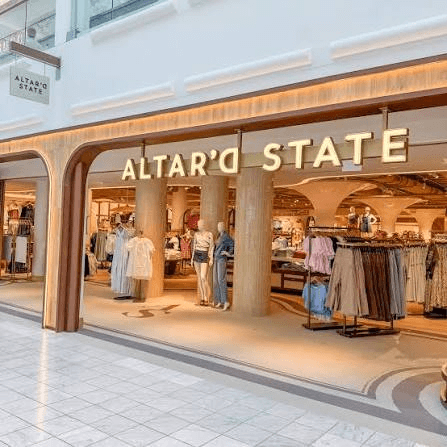
Reports of Altar’d State store closures have been circulating, and they have prompted a direct question from shoppers: is the company going out of business? The short answer is no — at least not based on the available evidence. But the longer answer requires separating what has actually happened from what those events genuinely mean.
This article covers whether Altar’d State has filed for bankruptcy, which specific stores have closed, how a related brand called Arula factors into the confusion, and how you can check the status of your local store.
What “Going Out of Business” Actually Means for a Retail Chain
Before drawing conclusions, it helps to define the terms. “Going out of business” can mean very different things depending on context, and conflating them leads to unnecessary alarm.
There are four distinct events that often get lumped together:
- Store closure: A single location shuts down. The company continues operating elsewhere.
- Chain contraction: A brand closes multiple locations, usually underperforming ones, while keeping others open.
- Bankruptcy: A company files for legal protection from creditors. This does not automatically mean the business closes.
- Liquidation: The company winds down completely, sells off inventory, and ceases to exist as a going concern.
A company can close five, ten, or even twenty locations and still operate as a healthy business. This is especially common in mall-based specialty retail, where lease terms and foot traffic shift constantly. Retailers routinely close underperforming stores while keeping profitable ones open and running active e-commerce operations at the same time.
Reading a single closure announcement as a signal of company-wide collapse is rarely accurate. That framing applies directly to what has happened with Altar’d State.
Altar’d State as a Company — A Brief Background
Altar’d State is a women’s clothing chain founded in 2009 and headquartered in Knoxville, Tennessee. The brand sells women’s, children’s, and infant apparel, along with accessories. According to its ZoomInfo company profile, the business employs roughly 1,000 to 5,000 people and maintains an active official website.
This is not a small, single-location boutique. It is a multi-location retail operation with a physical and digital presence. That context matters when evaluating whether a handful of store closures represent a broader collapse or a routine business adjustment.
The company’s LinkedIn page and public directories show an active brand with headquarters still in place and no signs of a formal wind-down.
Which Altar’d State Stores Have Closed
Specific closures have been confirmed. Reported shuttered locations include stores in the Washington, D.C. area — specifically at Westfield Montgomery, Arlington, and Tysons Corner. These closures were covered by Store Reporter, which documented the Westfield Montgomery location closing in particular.
These are select location closures, not a company-wide shutdown. The distinction matters. Losing three stores in one metropolitan area does not mean every Altar’d State in the country is closing.
It is also worth noting that store-specific closure status can change quickly. A location listed as closed in one directory might reflect outdated information, and a location showing as open may have since closed. Relying on a single review site or a third-party listing for definitive answers can be misleading.
If you want to know whether your local store is still open, here are the most reliable ways to check:
- Visit the official Altar’d State website and use its store locator.
- Check your local mall’s directory directly.
- Look at recent customer reviews or Google listings for that specific location.
No single source is definitive, but combining two or three of these should give you an accurate picture.
Arula’s 2025 Closure Is Not the Same as Altar’d State Closing
Part of the confusion surrounding Altar’d State’s status comes from a separate but related brand called Arula. Arula operates under the same corporate umbrella as Altar’d State but targets a different customer segment. The two are not the same brand.
In 2025, Arula announced closures, which generated coverage from outlets including The Curvy Fashionista. That reporting is accurate about Arula. The problem is that readers and some media coverage may have blurred the line between Arula closing and Altar’d State closing. They are two distinct brand-level events.
Think of it this way: if a parent company owns Brand A and Brand B, and Brand B closes, that does not mean Brand A is shutting down. It means Brand B is shutting down. Applying Arula’s closure news to Altar’d State’s status is not a reasonable conclusion based on the available evidence.
If you are researching Arula specifically, that is a separate situation worth following on its own. But it should not be treated as confirmation that Altar’d State itself is in serious trouble.
No Bankruptcy or Liquidation — What the Available Evidence Shows
The most consequential version of the question is whether Altar’d State has filed for bankruptcy or entered any kind of default proceedings. Based on available evidence, the answer is no.
A research summary from martini.ai, which reviewed available public information on the company, found no record of bankruptcy protection filings or default proceedings involving Altar’d State. That finding aligns with what is visible in public company directories: the headquarters remains active, the website continues to operate, and the brand maintains a visible presence across professional and public platforms.
None of this guarantees the company’s future financial health. Retail is a difficult industry, and conditions can change. But based on what is publicly available right now, there is no basis for the claim that Altar’d State is bankrupt, liquidating, or shutting down entirely.
The evidence supports a more measured reading: a functioning retail chain that has closed some locations, likely for operational or market reasons, while continuing to operate in other areas and online.
How to Read Retail Closure News Without Overreacting
Altar’d State is not unique in this situation. Many well-known retail chains have closed dozens of locations over the past several years without going out of business. Bath & Body Works, Gap, and Victoria’s Secret have all trimmed store counts significantly while remaining active businesses. Closures are often a sign of strategic adjustment, not imminent collapse.
Mall-based retail in particular has been through a structural shift. Foot traffic patterns changed, lease economics tightened, and brands that leaned heavily on physical locations have had to recalibrate. Closing underperforming stores while investing in e-commerce and stronger physical locations is a common response, not a death signal.
When you see a closure headline, it is worth asking a few practical questions before drawing conclusions:
- Has the company filed for bankruptcy or announced liquidation?
- Are these closures concentrated in one region, or are they happening nationwide?
- Is the company’s website still active and taking orders?
- Are there any official statements from the company about its direction?
In Altar’d State’s case, the answers currently favor a picture of selective contraction rather than business failure. For more analysis on retail business news and how to interpret it, InPage Business covers these topics with a focus on practical clarity.
Final Takeaway
Altar’d State has closed specific store locations, including several in the Washington, D.C. area. A separate but related brand, Arula, announced its own closures in 2025. Neither of these events, based on available evidence, indicates that Altar’d State as a company is going out of business, filing for bankruptcy, or entering liquidation.
The company remains active, its website is operational, and no credible public source has documented bankruptcy proceedings or a company-wide shutdown. If you are concerned about a specific location, the most reliable approach is to check the official website’s store locator or contact that location directly.
Retail closures are worth tracking, but they deserve accurate framing. Closing some stores is not the same as closing all stores — and that distinction matters for shoppers, employees, and anyone trying to make sense of what is actually happening.
Read This: