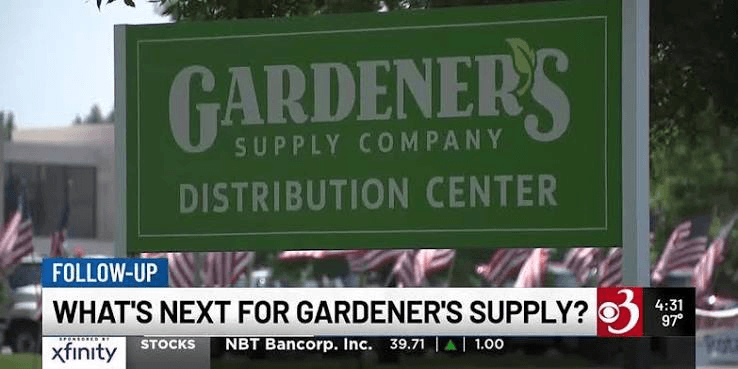
When a familiar gardening retailer files for bankruptcy, it’s natural to assume the worst. Customers wonder if their local store will close. Employees worry about their jobs. Vendors ask whether they’ll get paid. For Gardener’s Supply Company, the situation that unfolded in 2025 triggered all of these concerns — but the full picture is more nuanced than the headline suggests.
This article breaks down what actually happened: the bankruptcy filing, who bought the company, which stores stayed open, what employees experienced, and what customers can reasonably expect from the brand going forward.
Gardener’s Supply Filed for Bankruptcy, But Did Not Shut Down
Gardener’s Supply Company filed for Chapter 11 bankruptcy on June 20, 2025, in Delaware. That much is confirmed. But Chapter 11 is not the same as closing a business.
Chapter 11 is a reorganization process. It gives a company legal protection while it works through a structured sale or restructuring plan. The business keeps operating during that time — customers can still shop, and employees still show up to work.
In this case, the filing was specifically designed to facilitate an orderly sale of the company’s assets. Industry media and local news were clear: the business would not close as a direct result of the bankruptcy filing. The Hadley, Massachusetts store, for example, publicly confirmed it would remain open “for the foreseeable future” and operate as usual throughout the proceedings.
So if you heard “bankruptcy” and assumed “shutdown,” that assumption needs a correction.
Why Gardener’s Supply Reached This Point
No single factor caused the bankruptcy. Court documents and coverage point to a combination of pressures that built over several years.
- Revenue dropped roughly 35% from pandemic-era highs. Home gardening surged during COVID-19 lockdowns, and Gardener’s Supply benefited significantly. When consumer behavior normalized, sales fell sharply.
- The company carried heavy obligations tied to its employee stock ownership plan (ESOP), including share buyback requirements that became difficult to sustain.
- Two failed technology rollouts added operational strain and cost without delivering the expected returns.
- Rising shipping costs, tariffs, and marketing expenses compounded the financial pressure across the business.
- The company defaulted under a Bank of America credit facility, which ultimately triggered the formal bankruptcy process.
At the time of filing, the company’s liabilities ranged between $10 million and $50 million, with nearly $5 million owed to approximately 30 creditors, including a significant balance with UPS.
This is a case where multiple problems arrived at once, not one catastrophic mistake.
Gardens Alive Acquired the Brand and Most Store Operations
Gardens Alive, Inc. — an Indiana-based catalog and e-commerce gardening company — submitted a $9 million stalking-horse bid in June 2025. The sale closed on August 8, 2025, transferring the Gardener’s Supply brand and its assets to the new owner.
This ended nearly 38 years of employee ownership under the parent entity, America’s Gardening Resource, Inc. That parent company then proceeded through a confirmed plan of liquidation, finalized in March 2026.
Here’s where the language gets important. The entity that is accurately described as “going out of business” is America’s Gardening Resource, Inc. — the original parent corporation. The Gardener’s Supply brand and its retail operations are not going out of business. They transferred to a new owner and continued operating.
Think of it this way: the legal structure that owned the company dissolved, but the stores, the website, and the brand name moved forward under different ownership. It is a change of hands, not a shutdown.
Store Closures, Layoffs, and What Happened to Employees
The transition was not without consequences for workers and specific locations. About 40 employees were laid off ahead of the sale closing. That is a real impact for those individuals and their families, regardless of how the broader brand story ended.
Of the six retail locations operating at the time of the bankruptcy filing, five remained open under the new owner. These included stores in Williston, Burlington’s Intervale, New Hampshire, and Massachusetts (including Hadley). Gardens Alive stated that employees at those five locations would keep their jobs.
The one location confirmed for closure was the seasonal garden center in Shelburne, Vermont, which was part of the transaction agreement.
For former employee-owners, the outcome was difficult. ESOP holders — people who had ownership stakes through the employee stock ownership plan — received no distribution under the confirmed plan of liquidation. Nearly four decades of employee ownership ended without a financial return for those shareholders.
What the Bankruptcy Meant for Suppliers and Creditors
While customers at most locations saw little disruption day-to-day, suppliers and vendors faced a harder reality. Local growers and small businesses that supplied products to Gardener’s Supply were left waiting for payment as part of the bankruptcy claims process.
This had a noticeable ripple effect in Vermont’s horticulture community. Even though the brand continued operating, unpaid invoices meant real financial strain for smaller vendors who had depended on that business relationship.
Creditors must navigate court procedures to recover what they are owed — a slow and uncertain process even in cases where the brand itself survives.
What Customers Can Expect Going Forward
For most customers, the practical experience of shopping with Gardener’s Supply has continued. Online sales, catalogs, and the majority of brick-and-mortar stores operate under the Gardener’s Supply brand, now backed by Gardens Alive.
That said, ownership has changed. If you have outstanding orders, gift cards, or warranty questions, it is worth contacting the company directly to confirm current policies. Commitments made by the previous ownership structure may not automatically carry over in the same form.
Gardens Alive has publicly stated its intent to keep most stores open, but no business can guarantee permanent, unchanged operations. When a specialty retailer is acquired by a larger catalog and e-commerce company, strategies can shift over time. There are no announced plans to close additional locations, but customers and community members should stay informed as the new ownership settles in.
For broader context on how retail ownership transitions affect consumers and communities, InPageBusiness covers business developments across industries with practical analysis.
The Distinction That Answers the Headline Question
So — is Gardener’s Supply going out of business?
From a legal and corporate standpoint, the original employee-owned parent entity, America’s Gardening Resource, Inc., has been liquidated. That organization is gone.
From a consumer standpoint, the Gardener’s Supply brand is not gone. Most stores are open. The website continues. The brand operates under new ownership.
The confusion is understandable. “Bankruptcy” and “going out of business” sound like the same thing, but in this case, they describe two different outcomes happening to two different entities at the same time.
One entity closed. The other changed hands and kept operating.
Final Thoughts
Gardener’s Supply’s situation is a useful example of how retail bankruptcies actually work — complicated, layered, and rarely a clean story in either direction. Workers lost jobs. Vendors went unpaid. An employee-owned structure that had lasted nearly four decades came to an end. Those are real losses worth acknowledging.
At the same time, five stores remain open, the brand has a new owner with resources to invest, and customers in Vermont, New Hampshire, and Massachusetts can still access the products and gardening expertise the company is known for.
The answer to “is Gardener’s Supply going out of business” is: the company that originally built it is gone, but the brand it built is still operating. Whether that is a satisfying outcome depends on where you stood in the original structure — as a customer, an employee, a vendor, or an ESOP shareholder.
Read This: