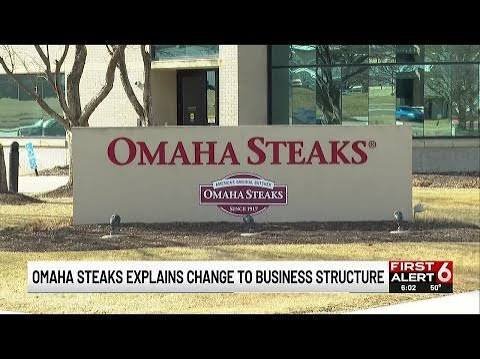
Recent headlines about Omaha Steaks have sparked a wave of confusion. Many people reading the news assumed the 100-year-old brand was shutting down entirely. That assumption is not accurate.
What actually happened is more specific — and more nuanced — than a full business closure. This article breaks down exactly what changed, which part of the company was affected, what it means for customers and local restaurants, and whether there are any real signs of broader financial trouble.
What Omaha Steaks Actually Announced
In February 2026, Omaha Steaks announced it was exiting its foodservice and restaurant supply division. The company did not file for bankruptcy. It did not announce a full shutdown. It did not go out of business.
The company described the move as a strategic decision — one that aligns with where it is currently focusing its growth. The announcement specifically affected the wholesale side of the business, which supplies beef to restaurants. The consumer-facing brand was not shut down.
Some employees were impacted by the change. Reports from KETV, Food Processing, and KMTV indicate that dozens of employees were affected, representing approximately 2% of the company’s total staff. A single confirmed final number has not been reported across all sources, so it is reasonable to treat “dozens” as the clearest available figure.
The Difference Between Foodservice and Direct-to-Consumer Sales
Understanding this distinction is key to understanding what actually happened. Omaha Steaks operates across more than one business channel, and closing one does not mean closing the others.
The foodservice division supplied beef wholesale to restaurants. This is a business-to-business operation — it has little to do with what most customers experience when they visit the Omaha Steaks website or pick up a gift box at a retail store.
The direct-to-consumer side of the business includes online ordering, home delivery, gift boxes, subscription plans, and physical retail stores. According to reporting from KETV and Food Processing, all of those channels remain active and are actually the focus of the company’s current growth plans.
A helpful comparison: imagine a retailer that sells products both in a wholesale aisle and through its regular storefront. If the retailer closes the wholesale aisle, the storefront does not disappear. Customers shopping at the main store experience no interruption. That is roughly what happened here.
A person ordering a holiday gift box online is in a completely different purchasing channel than a restaurant buying bulk wholesale meat. Those two customers were never really in the same transaction to begin with.
How This Decision Affects Omaha-Area Restaurants
While the direct-to-consumer business remains intact, the impact on local restaurants is real and worth acknowledging.
Approximately 100 Omaha-area restaurants were notified that they would need to find new beef suppliers. That is a meaningful disruption, particularly for smaller restaurants that had built their menus or supplier relationships around Omaha Steaks product.
Switching suppliers quickly is not a simple task. It can affect menu planning, food costs, and even branding — especially for a restaurant that had been featuring Omaha Steaks beef as part of its identity. Alternative suppliers may carry different price points, which could require menu price adjustments or recipe changes.
This disruption reflects a change in Omaha Steaks’ business priorities. It does not reflect an inability to operate. The two are quite different, even if the short-term consequences for restaurant owners feel similar.
Where Omaha Steaks Is Placing Its Focus Instead
One of the clearest signs that this is a strategic shift rather than a decline is where the company is directing its resources.
Omaha Steaks plans to open more than a dozen new retail stores in 2026. The company is also expanding its fulfillment centers and consolidating production operations, including moving production from an older facility to a more modern plant in Omaha. These are not the moves of a company preparing to close.
The growth areas the company has identified include:
- Retail store expansion
- E-commerce and online ordering
- Subscription programs
- Corporate gifting
Exiting a lower-margin wholesale channel to concentrate on direct-to-consumer operations is a recognized business model shift. It happens across many industries. A company decides that one channel no longer fits its direction, exits it, and puts those resources into channels that better serve its goals.
That pattern on its own is not a distress signal. It is a common restructuring move. Whether it pays off for Omaha Steaks in the long run depends on execution — but the decision itself is consistent with a company that is repositioning, not retreating.
Is There Any Sign of Broader Financial Trouble?
This is the question most readers actually want answered, and it deserves a direct response.
Based on currently available reporting, there is no bankruptcy filing, no acquisition announcement, and no liquidation event connected to Omaha Steaks. The sources covering this story — including KETV, Food Processing, and KMTV — frame the changes as operational restructuring, not financial collapse.
The company is a privately held, family-owned business. That means detailed financial statements are not publicly available, which makes it impossible to make definitive claims about its internal financial health. Anyone presenting a confident assessment of Omaha Steaks’ private financials without primary source data is speculating.
What can be said based on available reporting is this: the company is cutting one division while simultaneously investing in new stores, expanded fulfillment, and modernized production. That combination suggests resource reallocation, not a company running out of options.
For business readers who want to follow strategic shifts like this one, InPage Business covers company news, industry moves, and business model changes in a clear, practical format.
None of this means Omaha Steaks is guaranteed to thrive. Retail expansion carries its own risks, and the direct-to-consumer market for premium beef is competitive. But there is currently no verified evidence that the company is heading toward closure.
What This Means for Customers
If you are a regular Omaha Steaks customer — someone who orders online, shops at a retail location, or sends gift boxes — there is no reported change to those services.
Online ordering, home delivery, subscriptions, and gift purchasing all remain part of the company’s active and stated growth strategy. The foodservice exit does not affect those channels.
If you are a restaurant owner who sourced beef from Omaha Steaks, the situation is different. You will need to identify and transition to a new supplier. That is a real operational challenge, and local restaurant owners in the Omaha area are working through it now.
The Bottom Line
Omaha Steaks is not going out of business. The company exited its foodservice and restaurant supply division in February 2026, which affected dozens of employees and approximately 100 local restaurants that relied on that supply channel.
At the same time, the company is actively expanding its retail footprint, growing its fulfillment operations, and focusing on direct-to-consumer sales. That is not the profile of a business in collapse.
The confusion is understandable. Headlines about layoffs and restaurant supply endings can read like shutdown news, especially when they reference a well-known brand. But the details tell a more specific story: one division closed while another part of the business continues to grow.
For anyone who relies on Omaha Steaks as a consumer, the service you use appears to be unaffected. For anyone in the restaurant industry, the supply disruption is real and requires practical action. Those are two very different situations, and treating them as the same thing leads to the kind of confusion that sparked this article in the first place.
Read This: