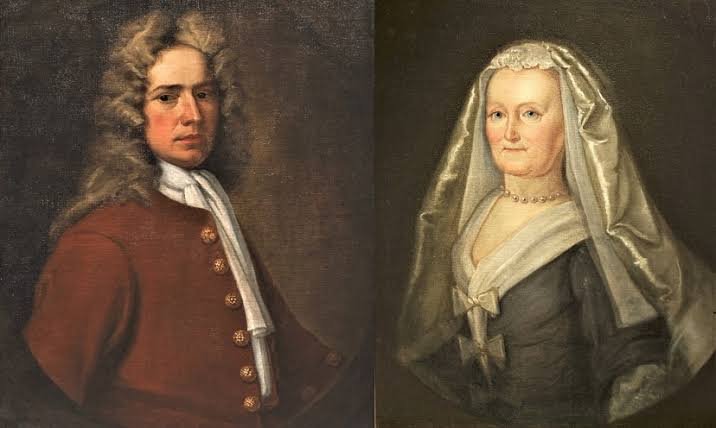
The name John Bolling shows up constantly in early American genealogy research. For most historians and family researchers, the name points to one specific man: Colonel John Bolling, a colonial Virginia planter born in 1676 whose family line traces directly back to Pocahontas.
He was not a modern public figure. His significance comes from his place in history — as a landowner, politician, and the connecting link between one of America’s most recognized historical figures and a family that would later touch the Jefferson family tree.
This article covers who Colonel John Bolling was, how he was descended from Pocahontas, what his family life looked like, and why his name still appears so often in genealogy records today.
Who Was John Bolling?
Colonel John Bolling was born on January 27, 1676, in colonial Virginia. He died on April 20, 1729. He lived most of his life in Henrico and Charles City counties, and he is commonly associated with Kippax Plantation, one of the properties tied to the Bolling family’s Virginia presence.
His roles in colonial society were typical of wealthy Virginia men of that era. He worked as a planter and merchant, managed considerable landholdings, and served in a local military capacity. These roles were not separate careers — they overlapped and reinforced each other constantly.
Bolling also served in the Virginia House of Burgesses, representing Henrico County across multiple terms. Political service was closely tied to land and social standing in colonial Virginia, and his seat in the Burgesses reflected both.
His Connection to Pocahontas
This is the question most people are searching for, and it is worth answering carefully because one common error keeps appearing: Pocahontas was John Bolling’s great-grandmother, not his grandmother.
The generational chain looks like this:
- Pocahontas and John Rolfe had one son: Thomas Rolfe
- Thomas Rolfe had a daughter: Jane Rolfe
- Jane Rolfe was John Bolling’s mother
So the line runs: Pocahontas → Thomas Rolfe → Jane Rolfe → John Bolling.
That is three generations between Pocahontas and John Bolling, making her his great-grandmother through his maternal line. Both Wikipedia and FamilySearch support this lineage.
It is a simple chain once laid out, but because the name “Pocahontas” is so well known and the intervening names are less familiar, the connection often gets shortened or misstated in casual retellings.
His Parents and Early Family
John Bolling’s father was Colonel Robert Bolling, an English-born merchant and planter who established the Bolling family in Virginia. His mother was Jane Rolfe, the daughter of Thomas Rolfe and granddaughter of Pocahontas.
Jane Rolfe died shortly after John’s birth, according to genealogical accounts. This means John Bolling grew up without his mother. He is identified in genealogical records as the only known child of the union between Robert Bolling and Jane Rolfe.
His background combined his father’s English merchant heritage with his mother’s mixed Native American and English ancestry. That combination gave the Bolling family a distinctive and well-documented place in Virginia colonial history — one that genealogists have traced carefully for generations.
Marriage, Children, and the Family He Built
In 1697, John Bolling married Mary Kennon. She was the daughter of Richard Kennon, a prominent Virginia landowner and merchant. The marriage connected two established colonial families.
Together, John and Mary had several children. Among them was Major John Bolling Jr., born in 1700. The junior John Bolling would go on to build his own household and contribute to the next chapter of the family’s history.
One of the notable later connections came through John Bolling’s descendants. A man named John Bolling III — part of the next generation down from Major John Bolling Jr. — married Mary Jefferson, the sister of future U.S. president Thomas Jefferson.
It is worth being precise here: that Jefferson connection did not come directly through Colonel John Bolling himself. It came through his son’s line, a generation later. Colonel John Bolling was, in that sense, the great-grandfather-adjacent figure who made that connection genealogically possible — but the direct link was through his son.
Colonel John Bolling vs. Major John Bolling Jr.
One of the most consistent sources of confusion in genealogy research is the fact that multiple men in this family shared the name John Bolling. It helps to keep two of them clearly separated.
Colonel John Bolling
Born 1676, died 1729. Son of Robert Bolling and Jane Rolfe. Married Mary Kennon in 1697. Served in the Virginia House of Burgesses. Associated with Kippax Plantation and Henrico County. He is the man most directly described as a great-grandson of Pocahontas.
Major John Bolling Jr.
Born 1700, died 1757. Son of Colonel John Bolling and Mary Kennon. He married twice — first Elizabeth Lewis, then Elizabeth Blair — and genealogical records attribute a large family to him. He is one generation removed from the colonial planter most people are researching.
When a genealogy record simply says “John Bolling” without a title or exact date, it is worth checking the birth year, spouse name, parents, and location before assuming it refers to either of these men specifically. Several later descendants also carried the name.
His Life in Colonial Virginia
To understand John Bolling’s world, it helps to understand how colonial Virginia worked. Land, family, commerce, and political office were tightly connected. A man like Colonel John Bolling was not simply a farmer — he was a merchant, a local military officer, and a legislator, often all at the same time.
The Bolling family properties, including Kippax and Cobbs, were not just homes. They were working estates that generated income and represented social standing. Owning and managing that land was a full-time concern.
His seat in the Virginia House of Burgesses put him among the colony’s decision-makers. These were the men shaping local law, trade regulation, and relations with the colonial government in London. It was a meaningful role, not a ceremonial one.
For readers interested in this period of American history, resources like Inpagebusiness can point you toward useful tools for organizing and presenting historical research.
Why His Name Appears So Often in Genealogy Records
The short answer is that John Bolling sits at an important crossroads in early American family history. His maternal line connects to Pocahontas, one of the most researched figures in colonial American history. His descendants later connected to the Jefferson family. And his own large family produced enough children and grandchildren to scatter the Bolling name widely across Virginia records.
That combination — Pocahontas descent, Jefferson adjacency, and a large multigenerational family in a well-documented colony — makes the Bolling name appear constantly in genealogy databases, compiled family trees, and historical registers.
Researchers should keep in mind that online family trees often reproduce one another’s information without fresh verification. Where possible, comparing details against primary records or carefully documented genealogy databases is the more reliable approach. Compiled sources can be useful starting points, but they work best when treated as leads rather than conclusions.
Final Thoughts
Colonel John Bolling was a real, documented historical figure — a colonial Virginia planter and politician who happened to carry a remarkable family line. His great-grandmother was Pocahontas. His descendants would eventually connect to Thomas Jefferson’s family. And his own life was shaped by the intertwined worlds of land, trade, family, and public service that defined colonial Virginia’s elite.
He was not famous in the modern sense. He did not seek the kind of public attention that the word “celebrity” now implies. But his place in American genealogy is well-established, and his name continues to matter to researchers tracing descent from Pocahontas and John Rolfe.
Understanding exactly who he was — and keeping him distinct from his son, his grandson, and the other John Bollings who followed — is the first step toward getting the family history right.
Read This: