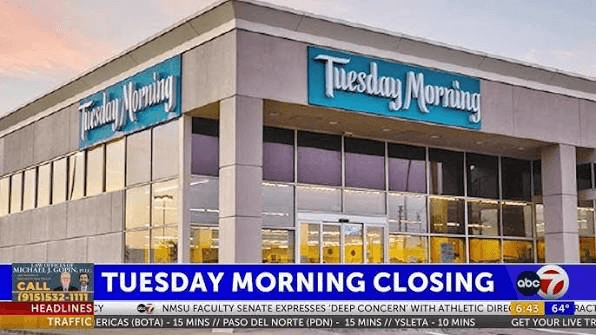
Many shoppers have driven to their local Tuesday Morning, only to find a dark storefront and a “For Lease” sign. It’s a fair question: did the company shut down completely, or is it still out there somewhere?
This article gives you a direct answer, explains what happened step by step, and covers what your options look like today.
The Short Answer: All Physical Stores Are Closed, but the Brand Still Operates Online
Tuesday Morning closed every one of its physical retail locations by July 2023. The closures followed a court-approved sale to Hilco Merchant Resources, a firm that specializes in retail liquidations. No U.S. store locations remain open.
That said, the Tuesday Morning brand did not vanish entirely. It transitioned into an online-only discount home goods retailer and continues to operate through its website as of 2026.
So the distinction matters: the brick-and-mortar chain is gone for good, but the brand itself survived in a different form. If you’re looking for a physical store, there isn’t one. If you’re open to shopping online, the website is still active.
A Brief History of Tuesday Morning Before the Collapse
Tuesday Morning was founded in 1974 in Dallas, Texas. It operated as an off-price, closeout retailer — the kind of store that sold home décor, bedding, kitchenware, and seasonal merchandise at discounted prices.
At its peak, the company ran nearly 700 stores across the United States. Its appeal was built around what the retail industry calls a “treasure hunt” experience. Inventory changed frequently and wasn’t always predictable, which gave customers a reason to visit often.
That model worked for a long time. But it also created a structural problem: the business was almost entirely dependent on people walking through the door. When that stopped happening consistently, there wasn’t much of a fallback.
Two Bankruptcies in Three Years: What Went Wrong
Tuesday Morning’s collapse didn’t happen overnight. It was the result of several problems building on top of each other over a number of years.
The First Bankruptcy: May 2020
The company filed for Chapter 11 bankruptcy in May 2020, largely driven by the pandemic. When stores were forced to shut down, revenue dried up fast. Tuesday Morning had limited e-commerce infrastructure to offset those losses.
The 2020 plan called for closing roughly 230 of its nearly 700 stores and reorganizing around approximately 450 locations. The company secured around $100 million in debtor-in-possession financing to support that restructuring effort.
It emerged from that bankruptcy, but not in strong shape. The debt load was heavy, foot traffic remained inconsistent, and competition from rivals like HomeGoods, TJ Maxx, and Ross was intensifying.
The Second Bankruptcy: February 2023
Three years later, Tuesday Morning filed for Chapter 11 again. Court documents cited “exceedingly burdensome debt” and continued poor financial results. At that point, the company had around 490 stores remaining.
The initial plan was to close 265 of those locations — more than half — and focus on the most viable stores. But that restructuring attempt didn’t hold. The court approved a sale to Hilco Merchant Resources for approximately $32 million, which effectively ended any chance of reorganization.
By July 2023, the company moved to convert its bankruptcy from Chapter 11 (reorganization) to Chapter 7 (full liquidation), signaling that there was no longer any plan to save the business in its current form.
The Deeper Issues Behind the Failures
It’s easy to point to COVID-19 as the cause, but the pandemic was more of a final push than the root problem. Several other factors played a significant role:
- Excessive lease obligations created costs the company couldn’t manage when revenue dropped.
- Heavy debt left little financial flexibility to adapt or invest.
- Strong competition from HomeGoods, TJ Maxx, and Ross put sustained pressure on margins and customer loyalty.
- Limited digital presence meant the company had no meaningful online channel when in-store shopping declined sharply.
A business built almost entirely around the in-store experience was poorly positioned for a period when that experience became unavailable or less appealing to consumers.
How the Store Closures Unfolded in 2023
Once the Hilco sale was approved, Tuesday Morning announced it was going out of business and launched clearance sales across roughly 200 remaining stores in 25 states. Initial discounts started at around 30% off, with all sales marked as final.
Customers were urged to use gift cards before a deadline in mid-May 2023. After that window, those cards were no longer accepted. All return policies tied to physical stores were also suspended during the liquidation period.
By July 2023, the last stores had closed. For shoppers who hadn’t heard the news, this is likely when they first noticed the empty storefronts.
It’s worth noting that those gift card and return deadlines are long past. If you have an old Tuesday Morning gift card from the brick-and-mortar era, it is unlikely to be honored at this point.
What Happened to Employees, Landlords, and Communities
The closure of hundreds of stores across 25 states had a real impact on workers, property owners, and local retail strips. Employees lost jobs, often with limited notice during a liquidation process.
Landlords were left with mid-size vacancies in strip malls and shopping centers — not always easy spaces to fill quickly. In many cases, these locations sat empty for months before new tenants moved in.
Tuesday Morning wasn’t alone in this. Its collapse came around the same time as Bed Bath & Beyond’s failure, making it part of a broader wave of home goods retailers struggling to survive post-pandemic conditions. That wave hit strip-mall landlords and retail workers particularly hard in 2022 and 2023.
What Shoppers Should Know Today
If you’re a former Tuesday Morning customer, here’s what the current situation looks like in practical terms:
- No physical stores exist. Every location in the U.S. closed by July 2023.
- Old gift cards from the store era are almost certainly no longer valid. The deadlines for using them during liquidation have passed.
- The Tuesday Morning website is still active. As of 2026, the brand operates as an online-only home goods discounter.
- The online experience is different. The “treasure hunt” feeling of browsing unpredictable in-store inventory doesn’t translate the same way to an e-commerce format.
If you’re specifically looking for that kind of discount, in-person shopping experience, alternatives like HomeGoods, TJ Maxx, Ross, and similar off-price stores continue to operate physical locations across the country.
What This Story Illustrates for Business Observers
Tuesday Morning’s path from nearly 700 stores to a website-only operation offers a few clear lessons for anyone paying attention to the retail sector.
First, a heavily store-dependent model without a digital backup creates serious vulnerability. When in-store traffic drops — whether due to a pandemic, a shift in consumer habits, or competition — there’s no cushion.
Second, surviving one bankruptcy doesn’t mean the underlying problems are solved. Tuesday Morning came out of its 2020 filing still carrying significant debt and still lacking a meaningful online presence. The second filing three years later was, in many ways, a predictable outcome.
Third, lease and debt obligations in retail can become unmanageable fast. Fixed costs don’t shrink when sales slow down, and that gap can widen quickly in a difficult environment.
For those who follow retail closely, resources like InPageBusiness track these kinds of developments across industries, offering useful context for understanding how business models succeed or struggle over time.
Final Thoughts
Tuesday Morning is no longer the store you remember. All physical locations closed in 2023 after back-to-back bankruptcies and a final sale to a liquidation firm. The brand still exists online, but the chain itself is finished.
Its story isn’t just about one company making poor decisions. It reflects real structural pressures that many traditional retailers have faced — excessive fixed costs, a business model tied to foot traffic, and the difficulty of pivoting to digital fast enough when the retail landscape shifts.
For shoppers who loved the in-store experience, that chapter is closed. For anyone curious about what happened and why, the explanation is straightforward: a combination of debt, competition, limited digital capability, and a pandemic that accelerated problems already in motion.
Read This: