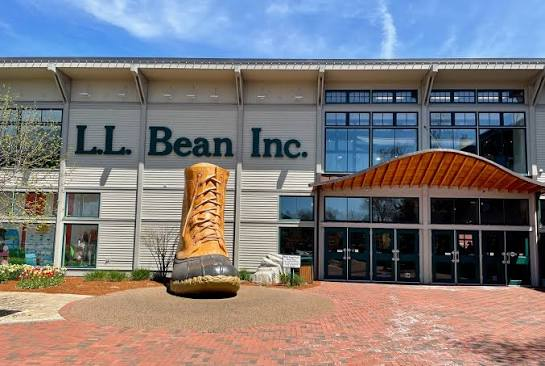
If you have seen recent headlines about L.L.Bean store closures, layoffs, or shutdowns, you might have wondered whether the company is in serious trouble. It is a fair question. When multiple negative stories appear around the same brand in a short period, it is easy to assume the worst.
But the full picture here is more straightforward than the headlines suggest. This article answers the core question directly, explains each event that fueled the rumor, and clarifies what these changes actually mean for customers.
L.L.Bean Is Not Going Out of Business
The short answer is no — L.L.Bean is not going out of business. The company continues to operate retail stores, a catalog business, and an active e-commerce platform.
In fact, in 2024, L.L.Bean announced new store openings in New York, Pennsylvania, Connecticut, and Indiana. Companies that are closing down do not open new locations. That expansion is a clear sign of ongoing investment, not retreat.
L.L.Bean has been around since 1912. It is headquartered in Freeport, Maine, and remains one of the longest-running outdoor retail brands in the United States. That kind of staying power does not disappear overnight.
One reason the rumors gain traction is that L.L.Bean is a privately held company. It does not release quarterly earnings reports the way publicly traded companies do. That limited financial visibility means that when any negative news surfaces — a closure, a layoff — there is no earnings call or investor report to put it in context. Routine business decisions can look alarming without that backdrop.
Why People Think L.L.Bean Is Closing
The confusion comes from three separate events that happened within a relatively short window of time. A store closed in New Haven. Facilities in Maine temporarily shut down. The company announced layoffs and reduced call center hours.
None of these events are connected to each other in the way people assume. But when they appear back to back, it is easy to read them as one continuous story of a company falling apart.
The distinction matters. A single location closing, a safety-driven pause in operations, and a staffing adjustment are each very different things. None of them, individually or together, signal that L.L.Bean is filing for bankruptcy or shutting down as a company.
To understand why, it helps to look at each event on its own terms.
The New Haven Store Closure Was a Single Location Decision
The L.L.Bean store on Broadway in New Haven, Connecticut closed in February 2024. It had been open for roughly five years. The closure was reported by the New Haven Independent and the Yale Daily News.
This was a location-level decision, not a company-wide action. Retail brands regularly review individual store performance. If a particular location is not profitable, or if the market dynamics have shifted, closing that store is standard business practice.
Think of it this way: if one branch of a restaurant chain closes, that does not mean the entire restaurant is shutting down. The same logic applies here. L.L.Bean closing a single store in New Haven says nothing about the health of the brand as a whole.
Customers who relied on that location can still shop through L.L.Bean’s website or visit another store. The company’s online platform remains fully operational, and new locations were being added at the same time this one closed.
The 2023 Maine Shutdown Was a Safety Response, Not a Business Failure
In October 2023, L.L.Bean temporarily closed its headquarters, retail stores, and manufacturing facilities in Maine. This followed the mass shooting in Lewiston, Maine — a serious public safety crisis.
The company’s decision to close during that period was a direct response to an active and dangerous situation. It was not a financial or operational decision. Once the immediate safety concern was resolved, L.L.Bean resumed normal operations.
Framing that closure as evidence of business trouble is simply inaccurate. It was a responsible corporate response to an emergency. Many businesses, schools, and organizations in the region made the same call for the same reason.
Conflating a safety-related pause with a company-wide shutdown misrepresents what actually happened.
What the 2024 Layoffs Actually Mean
In 2024, L.L.Bean announced layoffs and reduced call center hours. This was reported by USA Today. At first glance, layoffs can sound like a warning sign. But the context here is important.
The company attributed these changes to a shift in how customers are shopping. More people are placing orders online rather than by phone. When call volume drops, the business no longer needs the same number of phone-based customer service staff. Reducing that workforce is a direct response to that shift — not a sign of financial distress.
This kind of adjustment is not unique to L.L.Bean. Retailers across the industry have made similar staffing changes as e-commerce has grown. Adapting to where customers actually are is sound business practice.
It is worth noting that these layoffs happened alongside store expansion announcements. A company opening new locations in multiple states while reducing phone staff is not a company that is collapsing. It is a company reorganizing how it operates.
How to Read Retail News Without Jumping to Conclusions
These events around L.L.Bean are a good example of why it pays to look closely at business news before drawing broad conclusions.
When a retail brand makes the news for closures or job cuts, the instinct is to assume the worst. But retail businesses make location-level decisions, staffing adjustments, and operational changes on a regular basis. These are normal parts of running a large company, not indicators of collapse.
The questions worth asking are: Is the company still opening locations? Is it still serving customers? Is there any evidence of bankruptcy proceedings or a formal wind-down? In L.L.Bean’s case, the answers are yes, yes, and no.
For more practical business analysis like this, InPage Business covers the stories behind the headlines in clear, straightforward terms.
What Customers Can Expect Going Forward
If you are an L.L.Bean customer, the practical answer is simple: the company is still open. You can shop online, visit a store, or use the catalog. The brand is not going away.
Some individual locations may close over time as the company evaluates its store footprint. That is true of almost every major retailer. But the company is also opening new stores, which suggests it is making calculated decisions about where to invest rather than pulling back across the board.
Phone-based customer service may be more limited than it was previously, given the reduced call center hours. For most customers, that means the website or a store visit will be the primary way to get help or place an order.
The Bottom Line
L.L.Bean is not going out of business. The events that triggered this rumor — a single store closure in New Haven, a safety-driven shutdown in Maine, and staffing adjustments tied to online shopping growth — are each distinct and explainable on their own terms.
None of them, individually or combined, amount to a company in financial collapse. L.L.Bean has been operating for over 110 years, it is actively expanding its retail presence, and its e-commerce business remains fully functional.
When a business decision makes the news, it is worth slowing down before reaching for the worst-case interpretation. In this case, the facts point in a very different direction than the headlines might suggest.
Read This: