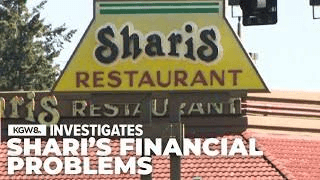
In October 2024, customers across Oregon drove to their local Shari’s Cafe & Pies and found dark windows and locked doors. No advance warning. No sign on the door. All 42 Oregon locations had closed overnight.
If you’re wondering whether Shari’s is completely done, the answer is more complicated than a simple yes or no. The chain is not fully gone — but it is a fraction of what it once was. Here’s a clear breakdown of what happened, what’s still open, and what the bankruptcy filing means.
Shari’s Was Once the Largest Family Dining Chain in the Pacific Northwest
To understand how significant this decline is, it helps to know where Shari’s started.
The chain was founded in 1978 in Hermiston, Oregon. It was built around 24-hour service, comfort food, and pie — the kind of place where you could get a slice of marionberry pie at 2 a.m. on a Tuesday. At its peak, Shari’s grew to roughly 95 locations across six states: Oregon, Washington, Idaho, California, Wyoming, and Nebraska.
Headquartered in Beaverton, Oregon, it was widely recognized as the largest family dining chain in the Pacific Northwest. Many Oregon locations had a distinctive hexagonal building design and lottery terminals, which made them a recognizable part of the state’s dining landscape.
That scale makes what happened next all the more striking.
The Short Answer: Shari’s Is Not Gone, But It Is a Shadow of What It Was
Shari’s has not fully shut down. But it has experienced a near-collapse that has erased most of its former footprint.
All Oregon locations — 42 restaurants — closed permanently in October 2024. That was the chain’s home state and the heart of its identity. As of mid-2025, approximately nine locations remain open across Washington, Idaho, and Northern California. That number is subject to change and should be verified directly.
The parent company, Lena Brands LLC, filed for Chapter 11 bankruptcy in May 2025. A company spokesperson indicated that only one California location would close as a direct result of the bankruptcy filing, and that locations such as the Bellingham, Washington restaurant would remain open.
The most accurate way to describe Shari’s right now is that it is in survival mode — not safely stable, but not completely finished either.
A Timeline of Closures: How the Chain Reached This Point
The collapse did not happen all at once. There were warning signs well before the Oregon shutdown.
2023 and Early 2024: Quiet Closures Begin
Financial trouble started showing up in court records and local news. Landlords began filing eviction and debt-collection lawsuits. More than 10 such cases were filed in Washington alone. Multiple locations in Washington and Idaho quietly closed before the larger Oregon wave hit.
October 20, 2024: Oregon Goes Dark
On the weekend of October 20, 2024, Shari’s closed all of its Oregon restaurants without public notice. Employees were caught off guard. Customers showed up to find buildings shut down with no explanation posted. The Oregon Lottery and local media confirmed the closures after the fact.
CEO Samuel Borgese later confirmed to the Oregon Lottery that all 42 Oregon units were permanently closed. He cited “constant challenges of an ever-changing and uncertain business environment” without offering specific details.
May 2025: Bankruptcy Filing
More than a year after the Oregon shutdown, Lena Brands LLC filed for Chapter 11 reorganization. Shari’s Management Corporation also filed separately and announced plans to close 86 restaurants across its broader portfolio — a figure that appears to include already-closed locations and other brands under the Lena Brands umbrella, such as Coco’s Bakery.
During the months between the Oregon closures and the bankruptcy filing, Shari’s website went offline and the company largely stopped communicating with the public — a period one industry publication described as “months of mystery.”
The Financial Problems Behind the Collapse
No single issue brought Shari’s down. It was a combination of accumulated problems over several years.
- COVID-19 disruption: Like many casual dining chains, Shari’s took a serious hit during the pandemic. Unlike some competitors, it did not recover well financially.
- Unpaid rent and evictions: Landlords filed over 10 eviction and unlawful detainer lawsuits against Shari’s in Washington state alone.
- Oregon Lottery debt: Shari’s owed nearly $1 million to the Oregon Lottery. Failure to pay led to lottery terminal shutdowns, which cut into a key revenue stream for Oregon locations.
- Unpaid suppliers and creditors: Reports indicated that vendors and other creditors were not being paid on time, further destabilizing the business.
- Rising operating costs: Labor and food costs increased across the restaurant industry, and Shari’s 24-hour model made it especially vulnerable to those pressures.
The chain was also heavily concentrated in the Pacific Northwest, which made it more exposed to regional economic shifts and regulatory cost increases.
What the Bankruptcy Actually Means
There is an important distinction between types of bankruptcy. Lena Brands filed for Chapter 11, which is a reorganization — not a liquidation. Think of it as a court-supervised process to restructure debts while keeping some operations running.
Chapter 7 bankruptcy, by contrast, involves selling off assets and shutting down entirely. Lena Brands has not taken that path, at least not yet.
In practice, Chapter 11 often means some locations close while others continue. Leases may be rejected or renegotiated. Debts get restructured. The goal, in theory, is to stabilize what remains. Whether Shari’s can achieve that with only a handful of locations is an open question.
For a broader look at how businesses navigate financial restructuring, InPageBusiness covers corporate finance and business strategy in accessible terms.
What’s Still Open — and How to Check
Based on reporting from mid-2025, approximately nine Shari’s locations remain open: roughly four in Washington, three in Northern California, and two in Idaho. The Bellingham, Washington location was specifically confirmed as remaining open following the bankruptcy filing.
However, this count can change quickly. The Bremerton, Washington location closed, for example, while nearby Silverdale and Orchard locations remained open at various points — showing how selective and unpredictable these closures have been.
If you want to know whether your local Shari’s is still open, here are the most reliable methods:
- Search the location on Google Maps and check for recent customer reviews from the past few weeks.
- Call the restaurant directly.
- Check local news for your city or county — smaller outlets often report on individual closures.
- Look at Shari’s official social media pages, since the company website has been unreliable or offline at times.
The Human Impact: Employees and Communities Left Behind
The closures did not just affect customers. Long-time employees were among those hit hardest.
Local news in Oregon covered workers with decades of service who received little to no notice before their locations shut down. One employee profiled in Washington had worked at Shari’s for nearly 30 years before suddenly finding herself without a job.
For communities, especially smaller Oregon cities, the closures left behind vacant buildings — many of them the chain’s signature hexagonal structures, which are difficult to repurpose for other businesses. Landlords are left with empty properties and unpaid rent claims. Nearby retail centers that relied on the restaurant as a traffic driver now face their own challenges.
What Industry Observers Are Saying
Some industry analysts draw a comparison between Shari’s and Sears — once a dominant regional force, now in a prolonged decline with a shrinking location count and persistent uncertainty about the future. The trajectory is similar: gradual erosion, followed by accelerating closures, followed by bankruptcy.
One industry consultant quoted in regional coverage suggested that Shari’s will likely survive in some form but will “probably keep shrinking.” That view aligns with the company’s own statements, which have focused on preserving a small core group of locations rather than rebuilding to any significant scale.
The broader family dining category — which includes chains like Denny’s and IHOP — has faced structural pressure from fast casual dining, food delivery, and declining late-night traffic. Shari’s 24-hour model, once a competitive strength, became a cost burden as those trends accelerated.
So, Is Shari’s Going Out of Business?
Shari’s has already exited Oregon — its home state — and closed the vast majority of its locations. Its parent company has filed for bankruptcy protection. What remains is a small cluster of restaurants in three states, operating under genuine financial strain.
The honest answer: Shari’s is not fully out of business as of mid-2025, but it is far closer to gone than it is to stable. The remaining locations may survive the restructuring process, or more closures may follow. The company has provided limited transparency, which makes confident predictions difficult.
If you were a regular customer, treat the remaining locations as a question mark until you can verify otherwise. And if the one near you has already closed, it is almost certainly not reopening.
Read This: