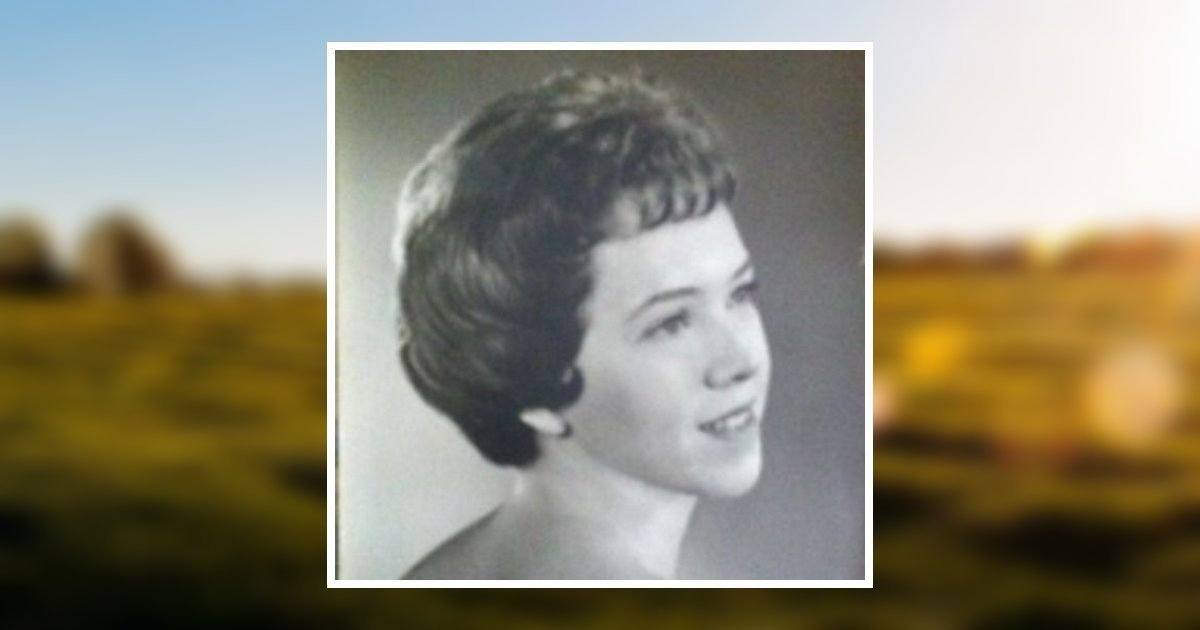
Marlynn Myers is a private individual. Most people have never heard her name on its own. But her name appears in public records and news archives because of one fact: she was the first wife of John Wayne Gacy, later convicted as one of the most notorious serial killers in American history.
This article covers what is reliably documented about Marlynn Myers — how she and Gacy met, their marriage, their children, and how the marriage ended. Where sources disagree or information is limited, that will be noted clearly. The goal here is a factual account, not a sensational one.
Who Marlynn Myers Is
Marlynn Myers is not a public figure in her own right. She did not pursue fame and has no independent public profile. Her name entered the public record only because of her marriage to Gacy in the 1960s, years before his crimes were uncovered.
Genealogy records on FamilySearch list a Marlynn Lee Myers, born in 1944 in Missouri, with parents identified as Fred W. Myers Jr. and Wilma Louise Hudson. These are genealogical records — useful as research leads — but they have not been independently verified through primary documents. They should be read as supporting context rather than confirmed biographical fact.
What is more consistently documented across reputable sources is her father’s connection to Kentucky Fried Chicken franchises in Waterloo, Iowa. That detail matters because it directly shaped where the young couple lived and how Gacy built his early professional life.
How She Met Gacy and When They Married
According to a 1979 report in The New York Times — published around the time Gacy’s crimes first became widely known — Myers and Gacy met while both were working in Springfield, Illinois. The report describes a retail work setting as the context for their meeting.
Sources differ on which employer brought them together. One account names a Nunn-Bush shoe outlet. Another refers to Roberts Brothers, a clothing store. Because reputable sources disagree on this point, it would be misleading to state one version as settled fact. What seems consistent across accounts is the city: Springfield, Illinois.
Their marriage is reported to have taken place in 1964, following a short courtship. The exact date is also a point of some uncertainty. Some sources report April 9, 1964, while others point to September of that year. Without an original marriage record to consult, both dates should be treated cautiously. The 1964 year itself is the more consistently reported detail.
Life in Waterloo, Iowa, and the Family Business
After marrying, the couple relocated to Waterloo, Iowa. The move was connected to Myers’ father, Fred W. Myers, who owned and operated several Kentucky Fried Chicken franchise locations there. People, Newsweek, and Hello Magazine all support this detail.
Gacy became involved in managing the family’s restaurant business during this period. By most accounts, he was seen publicly as a young businessman establishing himself in the community. This was the outwardly ordinary phase of their marriage — before any of his later criminal behavior came to light.
Two children were born during this time. Their son, Michael, was born in 1966. Their daughter, Christine, was born in 1967. These names and birth years appear consistently across reputable sources. Both are private individuals, and only these basic, already-documented details are appropriate to mention here.
The Waterloo years represent a distinct chapter: a young couple, a family business, two small children, and a life that looked conventional from the outside.
The Divorce and Custody Arrangement
The marriage did not last. Myers filed for divorce in December 1968. What makes the timing notable — and what multiple sources document — is that the filing date coincided with the day Gacy was sentenced in an earlier criminal case, one unrelated to his later murders.
Reporting that timing is straightforward. Drawing conclusions about her motivations from it is not. The article will not do that. The documented fact is simply that the divorce petition was filed on the same day as the sentencing.
Under the terms of the divorce, Myers was awarded custody of both children. She also received the family home or property as part of the settlement. The divorce was finalized in September 1969.
People and Newsweek both report the December 1968 filing and the September 1969 finalization, so these dates carry reasonable source support.
What Is Known About Her Life After the Divorce
This is where reliable public information becomes limited — and that limitation should be stated plainly.
According to reporting from the period when Gacy’s crimes became public, Myers had remarried at some point after the divorce. The New York Times noted that she had not disclosed her new name and had not had contact with Gacy for years. That account was published in 1979, a decade after the divorce was finalized.
Beyond those broad outlines, credible public information about her later life is sparse. There is no verified reporting on her current location, her circumstances, or whether she is still living. Any claim that goes further than what is documented here should be treated with skepticism.
Her decision to keep a private life after the divorce is not unusual given the circumstances. It also should not be treated as evidence of anything. Privacy is a reasonable response to an extraordinary and painful situation.
What Myers Was Not
It is worth being direct about something readers sometimes assume when researching this topic.
There is no credible evidence that Marlynn Myers knew about Gacy’s crimes. His murders occurred after the marriage had already ended. Gacy’s criminal activity as it relates to the murders took place years after the divorce was finalized in 1969. Being married to someone who later commits crimes does not establish knowledge of, or involvement in, those crimes.
Gacy was convicted of murdering 33 young men and boys. He was executed in 1994. His ability to maintain a normal-seeming public image as a businessman and community figure — even after the divorce — was widely noted in coverage of his case. That contrast between his public persona and his crimes is documented. Myers’ connection to that story ends at the divorce.
A Note on Sources and What They Can Tell You
Because Myers is a private individual, the sources that discuss her are largely secondary. The most useful are contemporary news reports from 1979, when journalists were actively piecing together Gacy’s background. Those reports — particularly from The New York Times — carry more weight than later retrospective summaries.
Genealogy records from sites like FamilySearch can help fill in family background, but entries on those platforms often reflect user-submitted data. A genealogy record is a starting point, not a conclusion. The same applies to celebrity family-tree pages on sites like MyHeritage.
For readers who want to research this topic further, Inpagebusiness covers profiles and background information on public figures and the people connected to them.
The summary of sources for this article: People, Newsweek, Hello Magazine, the 1979 New York Times report, and genealogy records on FamilySearch all informed the account above. Where those sources agree, the article reflects their agreement. Where they differ — such as on the exact marriage date or the name of the employer where Myers and Gacy met — the article acknowledges the uncertainty rather than picking one version arbitrarily.
Final Thoughts
Marlynn Myers entered the historical record through a marriage she eventually ended. She left Gacy before his crimes were committed and raised two children as a private individual. What is documented about her is fairly narrow: a mid-1960s marriage, a move to Iowa, two children, a divorce in 1968 to 1969, and a later life she chose to keep out of public view.
That is essentially the full picture that public records and reputable reporting support. Anything beyond it moves into speculation — and this article stops where the documentation stops.
Read This: