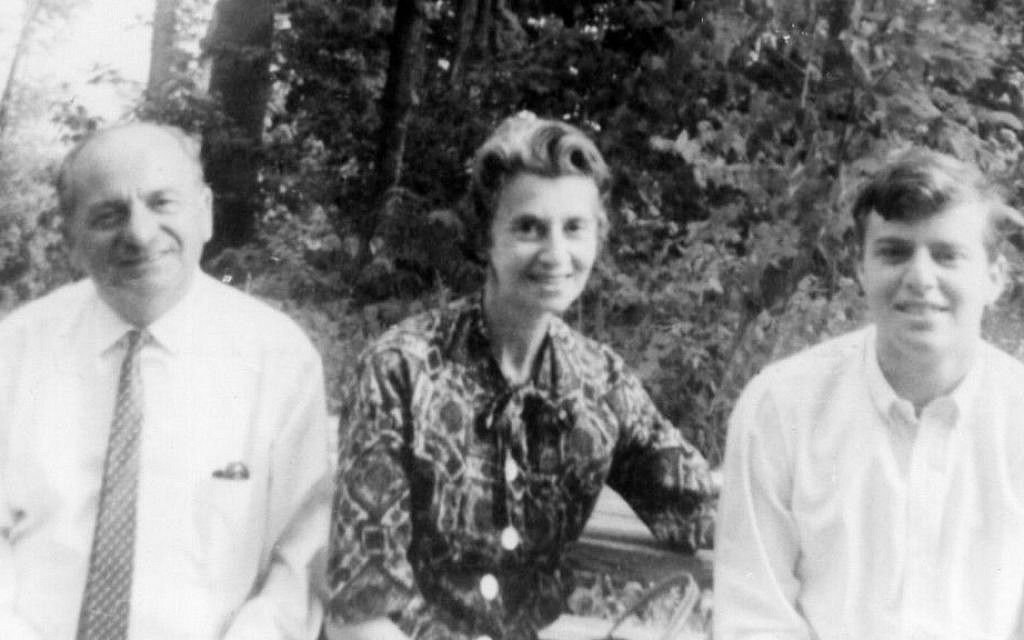
When people search for the name Margot Kallmann, they are usually not looking for a celebrity. They are looking for a connection — specifically, her connection to one of television’s most recognized faces, Jerry Springer. Her name appears in genealogy databases and Holocaust records, not entertainment headlines.
This article covers who Margot Kallmann was, her marriage and life before the war, the family’s escape from Nazi-controlled Europe, the devastating fate of those left behind, and why her name still surfaces in genealogy searches today.
Who Margot Kallmann Was
Margot Kallmann was born in 1906 and died in 1985. She was the mother of Gerald Norman Springer — the man the world came to know as Jerry Springer, the long-running television talk show host and former mayor of Cincinnati.
After marrying Richard Springer, Margot took on the surname Springer. That is why searches for “Margot Kallmann” often return fewer results than searches for “Margot Springer.” Kallmann was her birth surname, and once she married, most public and immigration records listed her under her married name.
Margot was not a public figure. She was a private person. Most of what is documented about her comes through genealogy profiles, immigration records, and accounts connected to her son’s family history. A FamilySearch profile for Gerald Norman Springer (1944–2023) confirms her birth year, death year, maiden name, and her relationship to Jerry Springer.
Her Marriage to Richard Springer and Life Before the War
Margot married Richard Springer, and the two built a modest working life before the war disrupted everything. According to available records, Richard ran a shoe shop while Margot worked as a bank clerk.
The couple came from Landsberg an der Warthe, a German city that is now known as Gorzów Wielkopolski in present-day Poland. As German Jews, they were living through an increasingly dangerous period. Throughout the 1930s, the Nazi regime steadily stripped Jewish citizens of their rights, livelihoods, and safety.
Like many Jewish families during that era, the Springers had to make a decision — stay and hope things improved, or leave while they still could. They chose to leave. That decision almost certainly saved their lives.
Arrival in Britain and the Years Before New York
Immigration records, as reported by the Jewish Journal, indicate that Margot and Richard arrived in Britain in 1939, shortly before World War II officially began. Margot was approximately 32 years old at the time; Richard was approximately 34.
The couple settled in Hampstead, England, which was home to a significant number of Jewish refugees who had fled persecution in mainland Europe around the same period.
Jerry Springer was born in London in 1944, during the family’s years in Britain. According to widely reported accounts, he was born in a London Underground station during a German air raid — a detail that became one of the more memorable footnotes in his public biography. This claim has been widely repeated, though it is worth noting it is separate from the immigration records themselves.
The family eventually left Britain and relocated to New York in 1949. That is where Jerry Springer grew up and where much of his later political and media career took shape.
The Holocaust and the Kallmann Family Members Left Behind
Not everyone in Margot’s family was able to escape. This is the most sobering part of her story, and it is one that connects her family’s experience to one of history’s darkest chapters.
Margot’s mother, Marie Kallmann, did not leave Europe. According to the FamilySearch genealogy profile, Marie Kallmann was murdered at Chełmno extermination camp. Chełmno, located in occupied Poland, was one of the first sites where the Nazis used gas to carry out mass killings during the Holocaust.
The loss did not stop there. The Jewish Journal reported that 27 members of Jerry Springer’s extended family were killed during the Holocaust. That figure comes directly from that publication and should be understood in that context, rather than as an independently verified total. Still, the number reflects what so many Jewish refugee families discovered after the war ended — that those they had left behind were gone.
This pattern was tragically common. German-Jewish families who managed to emigrate before the war escaped with their lives. Relatives who stayed behind, whether by choice or because they had no path out, faced persecution, deportation, and murder at the hands of the Nazi regime.
Readers who want to verify these records independently can consult archival Holocaust institutions such as Yad Vashem, which maintains extensive records of victims and survivors.
How Jerry Springer Brought His Mother’s History Into Public View
For much of his career, Jerry Springer was known for his television show rather than his family background. But in 2008, he appeared on the BBC program Who Do You Think You Are?, a genealogy series that traces the ancestry of well-known figures using historical records.
The episode investigated his family’s roots, including the fate of his maternal grandmother, Marie Kallmann. It brought the Springer family’s refugee history and Holocaust losses into public view in a meaningful way. Springer also spoke publicly about urging other Jewish families to explore digitized refugee and Holocaust records, which organizations like World Jewish Relief had been working to make more accessible.
That combination — a famous television host, a deeply human family story, and the growing availability of genealogy records — is the main reason why Margot Kallmann’s name surfaces in online searches today. People who watched the episode, or who have since encountered Springer’s biography, often search for more detail about his parents and where they came from.
For anyone interested in learning more about how public records and family history connect to celebrity backgrounds, resources like Inpagebusiness can point you toward useful research tools and context.
Why Margot Appears in Genealogy Searches
Margot Kallmann is not famous in her own right. Her name appears in searches because of the combination of factors outlined above — her son’s public profile, her family’s refugee story, and the increasing digitization of immigration and Holocaust records.
Platforms like MyHeritage and FamilySearch host user-submitted family trees and historical documents. These can be valuable starting points, but it is worth remembering that the quality and documentation of individual entries can vary. Immigration records, archival databases, and institutional Holocaust records tend to offer stronger corroboration than user-contributed trees alone.
If you are searching for Margot Kallmann and came across this article, the core facts are straightforward. She was born in 1906 in Landsberg an der Warthe, Germany. She married Richard Springer and worked as a bank clerk. She and her husband escaped to Britain in 1939, had a son named Jerry in 1944, and eventually settled in New York in 1949. Her mother did not survive the Holocaust. Margot herself died in 1985.
A Private Person Behind a Public Name
Margot Kallmann’s life was shaped by forces far larger than any individual story. She and her husband navigated persecution, displacement, and survival at a time when millions of others did not make it out.
She raised a son who went on to become one of the most recognizable television personalities of his generation. And through his willingness to speak publicly about the family’s past, the story of Margot Kallmann — a bank clerk from a small German city who escaped Europe with her husband just before the war — has found a place in the historical record.
She was not a public figure. But her story, and the losses her family endured, are worth knowing.
Read This: