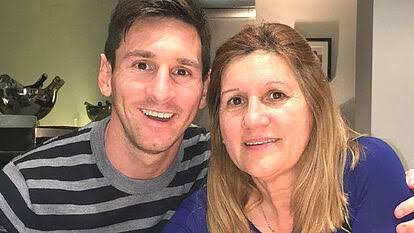
Lionel Messi is one of the most recognized athletes on the planet. His story has been told through trophies, records, and highlight reels. But behind his earliest years was something much quieter — a working-class family in Rosario, Argentina, and a mother named Celia Cuccittini who helped hold that family together.
This article covers who Celia is, what is publicly known about her life and work, her role during Messi’s formative years, and why her name continues to draw interest from fans around the world.
Who Is Celia Cuccittini?
Her full name is Celia María Cuccittini. She is best known publicly as the mother of Lionel Messi, the Argentine football star. She is married to Jorge Messi, and together they raised four children in Rosario, Argentina.
Celia is a private individual. She has not built a public profile of her own, and confirmed biographical details about her are relatively limited. Most of what is reported about her comes from coverage of Messi’s life and career rather than from any public platform she maintains herself.
That said, her name comes up often — and for good reason. Understanding who Messi is, personally, is difficult without knowing something about the family he came from.
The Messi Family in Rosario
Rosario is Argentina’s third-largest city, located about 300 kilometers north of Buenos Aires. It is where Lionel Messi was born in 1987, and it is where Celia and Jorge built their family life.
The couple raised four children: Rodrigo, Matías, Lionel, and María Sol. The household was working-class. Jorge worked as a factory supervisor, and Celia contributed to the family income through her own employment. It was a practical, grounded upbringing — not wealthy, but stable enough for a family deeply invested in their children’s futures.
Some reports also mention Italian ancestry on both sides of the Messi family, with roots loosely connected to the Marche region of Italy. This kind of Italian-Argentine heritage is not uncommon in Rosario, which historically received large waves of Italian immigration. It is worth noting as cultural context, though detailed genealogy claims should be treated with care.
Celia’s Work Life Before Messi’s Fame
Before her son became a global name, Celia was simply a working mother doing what she could to support her family. Reports from several sources describe her as having worked as a part-time house cleaner and in a magnet-manufacturing factory.
These jobs were practical contributions to a household running on two incomes. Jorge’s factory supervisor role provided a foundation, and Celia’s work helped fill the gaps. Raising four children on working-class wages in Argentina is not a simple task, and her employment during those years reflects that reality.
It is worth being measured here: detailed employment records, specific dates, and full job histories are not publicly documented. What sources consistently report is the nature of the work she did, not an exhaustive employment timeline. The picture that emerges is of a woman who worked steadily and quietly while managing a large household.
When Messi Left for Spain
One of the most personal chapters in Messi’s early story involves his move to Spain as a young teenager. He was dealing with a growth hormone condition that required expensive treatment, and FC Barcelona offered both medical support and a path into professional football. It was an opportunity the family chose to pursue, but it came at a real cost.
Accounts of this period suggest that Celia remained in Argentina for significant stretches of time while Messi was in Spain establishing himself. The distance was real. A child growing up in a foreign country, away from his mother, while navigating both medical treatment and the pressure of elite youth football — that is not a small thing.
Jorge eventually relocated to Spain to support Lionel more directly. Celia’s own movements during this period are less fully documented in public sources, but the emotional weight of that separation is something that has been acknowledged in various profiles of the Messi family.
What is often told as a purely sporting story — boy from Argentina becomes the best player in the world — also has this quieter, more personal layer. Families make sacrifices that do not show up in the statistics.
Celia’s Portrait on Messi’s Body
One of the most visible signs of Messi’s bond with his mother is a tattoo. He has a portrait of Celia tattooed on his body, commonly described in media coverage as being located on his back or shoulder-blade area. Descriptions vary slightly across different outlets, so the exact placement is worth noting with that caveat.
The tattoo has been referenced in numerous mainstream profiles of Messi and continues to draw interest from fans. It is one of the clearest public expressions of how he honors his mother, without her needing to say a word publicly herself.
It should not be read as more than what it is — a personal tribute from a son to his mother. But as symbols go, it is a meaningful one. Messi has built a life surrounded by team crests, national flags, and sponsor logos. That he chose to carry his mother’s face with him is its own kind of statement.
Celia’s Role in Messi’s Broader Story
Celia has not pursued a public career alongside her son’s fame. She is not a foundation executive or a business figure in Messi’s professional world. What she has been, by most accounts, is a consistent and emotionally important presence in his life.
At times, that presence has taken a more public form. There are reports that Celia has spoken up in defense of Messi when critics questioned his commitment to the Argentine national team. For years, some fans felt Messi did not play for Argentina with the same fire he showed at Barcelona. Celia, like any protective mother, reportedly pushed back on that narrative.
Messi has also been connected to charitable work through the Leo Messi Foundation, which focuses on education and health access for vulnerable children. Some family coverage places Celia within that broader family support network, though it would not be accurate to describe her as holding a formal executive role there based on what is publicly confirmed.
For anyone researching Celia’s story, resources like Inpagebusiness can offer useful context on navigating public information about celebrity families and the people behind well-known figures.
Why People Search for Celia Cuccittini
Interest in Celia typically follows major moments in Messi’s life — World Cup wins, family appearances, or profile pieces about his upbringing and personal influences. Readers are rarely looking for a standalone celebrity biography. They are usually trying to understand the full picture of who Messi is as a person.
That is a reasonable instinct. Great athletes are not formed in isolation. The environment, the family, the sacrifices made before anyone was watching — all of it matters. Celia Cuccittini represents that part of the story.
She was not the one scoring goals. But she was part of the foundation that made scoring goals possible.
A Private Woman in a Very Public Story
Celia María Cuccittini is not a celebrity in the traditional sense. She has not sought fame, built a media presence, or made herself part of the public conversation around her son’s career. What she did was raise four children in Rosario, work to support her household, navigate the complicated emotions of watching her son move thousands of miles away as a teenager, and remain a steady presence in his life through decades of extraordinary success.
The confirmed facts about her are modest in number but meaningful in weight. A working mother in a working-class Argentine household, whose son became one of the most celebrated athletes in history. And somewhere on that athlete’s body, her portrait — permanent and carried everywhere he goes.
That is not a small legacy, even for someone who has never sought the spotlight.
Read This: