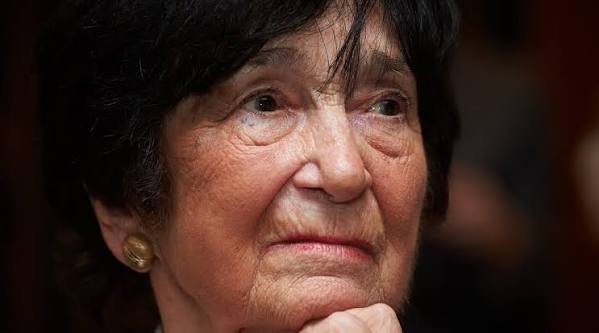
The name “Halina Szpilman” shows up in two separate places within the same family history. One belongs to a Holocaust victim — Władysław Szpilman’s younger sister. The other belongs to the physician who married Władysław in 1950 and spent the next fifty years at his side.
If you’ve come across both references and found them confusing, you’re not alone. Genealogy databases, biographical articles, and online family trees sometimes display both women under the same name without making the distinction clear.
This article covers who each woman was, what is publicly known about Halina Grzecznarowska Szpilman as Władysław’s wife, her professional background, her role in keeping his memory alive after his death, and what happened to his sister Halina during the war.
Two Women, One Surname — Clearing Up the Confusion
Władysław Szpilman, the Polish-Jewish pianist and Holocaust survivor whose life story inspired Roman Polanski’s film The Pianist, had a younger sister named Halina. She was born in 1917, one of four siblings in a musical family from Sosnowiec.
Władysław later married a woman named Halina Grzecznarowska, born in 1928. When she married him in 1950, she took the Szpilman surname. That’s how two different women ended up sharing the same name within the same family.
The easiest way to tell them apart is straightforward. The sister was born Halina Szpilman and always carried that name. The wife was born Halina Grzecznarowska and only became Halina Szpilman after marriage. Their birth years — 1917 and 1928 — also help separate them quickly when reading genealogy records.
Online family trees sometimes list both women under “Halina Szpilman” without further explanation, which is where most of the confusion starts. Looking for the maiden name or birth year clears it up immediately.
Halina Grzecznarowska — Background and Early Life
Halina Grzecznarowska was born in 1928 in Radom, a city in central Poland. According to Polish biographical sources, she moved to Warsaw around 1950 to pursue medical studies.
She trained and worked as a physician. She was not a performer, artist, or public figure in her own right — her life before and during her marriage to Władysław was largely private, as is common for many people connected to famous figures who did not seek the spotlight themselves.
Public records on her specific medical specialty or the institutions where she worked are limited. What is documented is her profession, her city of birth, and her connection to Władysław Szpilman through marriage.
Her Marriage to Władysław Szpilman
Halina met Władysław in 1948, according to interview-based sources. They married in 1950 and remained together until his death in July 2000 — a marriage that lasted fifty years.
The couple had two sons. One of them, Andrzej, appears in public records connected to Warsaw commemorative events held in later years.
Their marriage coincided with a significant period in Władysław’s life. By 1950, he had already survived the Warsaw Ghetto, gone into hiding, and been sheltered at great personal risk by others — including German officer Wilm Hosenfeld. After the war, he returned to his music career, working as a pianist and composer and eventually leading the music department at Polish Radio.
Halina lived through all of that with him. She was there during the quieter decades when his wartime story was not widely known outside Poland, and she was still there when international attention arrived following the republication of his memoir and the release of Polanski’s film in 2002.
What Happened to Władysław’s Sister Halina
Władysław’s sister Halina had studied at a conservatory and, like her brother, was part of a family deeply tied to music. Their brother Henryk was a writer, translator, and composer. Their parents, Estera Rapaport and Samuel Szpilman, had raised a family where artistic life was central.
That family was shattered in August 1942. Władysław’s parents, his brother Henryk, and his sisters Regina and Halina were deported from the Warsaw Ghetto to Treblinka. They were murdered there.
Władysław survived. The rest of his immediate family did not. This is the core reason why readers may find two different references to “Halina Szpilman” — one is his sister who died in the Holocaust, and the other is the woman he went on to marry after the war.
Knowing this history makes the distinction between the two women more than just a biographical footnote. It reflects two completely different life paths that happened to share the same name.
Halina as a Keeper of Władysław’s Story
After Władysław died in July 2000, Halina took on a quieter but meaningful public role. She participated in interviews and commemorations where she spoke about his wartime experiences, his reluctance to revisit those painful memories, and the significance of Wilm Hosenfeld’s help in keeping him alive.
In one reported interview, she described how her husband spoke of not burdening an entire nation with the guilt of a few individuals — a reflection of how he processed what had happened to him and his family.
In 2011, Halina and her son Andrzej attended the unveiling of a commemorative plaque in Warsaw connected to Władysław’s life. She also met Polish President Bronisław Komorowski during events marking the centenary of Władysław’s birth. These appearances show her as a dignified and present figure in the ongoing public recognition of her husband’s story.
Her role in relation to The Pianist is worth placing in context. She was the survivor’s wife and a firsthand witness to his postwar life, not a character in the wartime narrative the film depicts. Her relevance to the film is indirect — she knew the man at the center of it better than almost anyone.
For readers looking to understand the broader world around Władysław Szpilman, profiles like this one are part of what Inpagebusiness covers when exploring the people behind famous stories.
Her Death and Legacy
Halina Grzecznarowska Szpilman died in 2020. Polish sources identify her as buried alongside Władysław at Warsaw’s Powązki Military Cemetery, one of Poland’s most significant burial grounds.
She lived long enough to see her husband’s story reach audiences around the world. She outlived him by twenty years and spent much of that time as the most direct living connection to the man whose survival had become an internationally known piece of history.
Her own story — as a physician, a wife, a mother, and eventually a keeper of memory — is quieter than Władysław’s. But it’s a real one, and it deserves to be understood separately from both the wartime narrative and the sister whose name she came to share.
A Quick Reference to Tell the Two Women Apart
- Halina Szpilman (born 1917): Władysław’s younger sister. She studied at a conservatory and was deported to Treblinka in August 1942, where she was murdered.
- Halina Grzecznarowska Szpilman (1928–2020): Władysław’s wife. Born in Radom, trained as a physician, married Władysław in 1950, and took the Szpilman surname at that point.
If you’re reading a genealogy record and see “Halina Szpilman” without further context, the birth year and maiden name are the two details that resolve the confusion immediately.
Conclusion
The name Halina Szpilman carries two very different stories. One ends in tragedy in 1942. The other spans nearly a century, from a childhood in Radom to a long life lived alongside one of the most remarkable survivors of the twentieth century.
Halina Grzecznarowska Szpilman was not a celebrity in the conventional sense. She was a doctor, a wife, and in her later years, a thoughtful public voice for her husband’s memory. Understanding who she was — and how she differs from his sister — gives a clearer picture of the full Szpilman family story.
Read This: