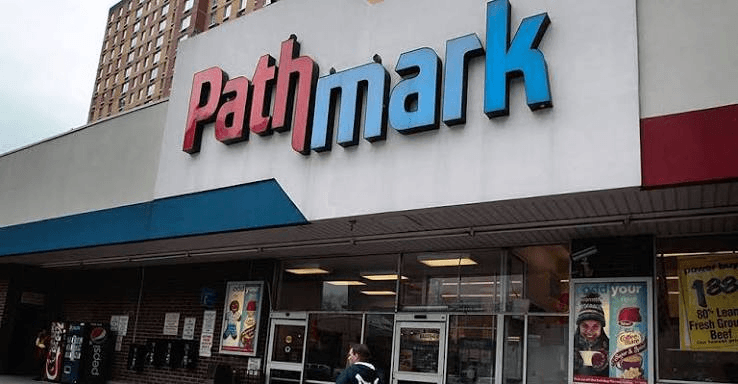
If you grew up in New York, New Jersey, or Pennsylvania, you probably remember shopping at Pathmark. Then, around 2015, those stores started disappearing — liquidation sales, shuttered entrances, and empty parking lots. For most people, that meant Pathmark was gone for good.
But some shoppers have recently spotted a Pathmark sign on a brand-new storefront. That raises a fair question: did Pathmark actually go out of business, or is something else going on?
The honest answer is: both. The original Pathmark chain is gone. But the name is not. Here is a clear breakdown of what happened, who owns the brand now, and what Pathmark looks like today.
Pathmark’s Origins and Its Place in the Northeastern Grocery Market
Pathmark was a well-established supermarket chain that served communities across New York, New Jersey, and Pennsylvania for decades. It was not a small regional player — it was a recognized name in some of the most densely populated neighborhoods in the country.
The chain operated under the A&P umbrella, officially known as The Great Atlantic & Pacific Tea Company. A&P ran multiple grocery banners, and Pathmark was one of its most recognized, particularly in urban and suburban Northeastern markets.
For many communities, especially in cities like Newark, Camden, and parts of New York, Pathmark was not just a convenience — it was often the primary place to buy groceries. That context matters when you understand how hard the closures hit.
How A&P’s Bankruptcy Brought Down the Pathmark Chain
The collapse of Pathmark was not really about Pathmark alone. It was about its parent company, A&P, filing for bankruptcy. When A&P went under, all of its banners — including Pathmark — were pulled into the same financial crisis.
During bankruptcy proceedings, A&P set out to sell or close a large portion of its approximately 296 stores. The company sought bidders for roughly 120 operations, with expected proceeds of around $600 million. Not every store attracted a buyer.
For the locations that received no serious offers, A&P chose to close them outright. The company cited two main reasons: a lack of buyer interest and significant ongoing operating losses at those stores. About 25 stores were closed on those grounds.
It would be too simple to blame the closures on one factor. Competition from big-box retailers, discount grocery chains, and changing shopping habits all played a role. A&P’s financial structure and accumulated debt made it difficult to adapt fast enough.
The Scale of Pathmark Store Closures Across the Region
The closures were widespread and happened relatively quickly. Three South Jersey Pathmark locations — in Camden, Edgewater Park, and Cherry Hill — shut down after being identified as underperformers. Those were not the only ones.
In one major wave, ten supermarkets across the region closed simultaneously. That included three Pathmark stores and seven Superfresh locations, affecting nearly 600 union members in a single round of cuts.
New Jersey workers were among the hardest hit. According to union officials, hundreds of employees were expected to lose their jobs within 60 days as New Jersey Pathmark locations wound down operations.
One closure that still resonates locally is the Hackensack, NJ Pathmark, which officially closed on October 10, 2015. Local coverage from NorthJersey.com revisited the event a full decade later, reflecting how much the store meant to that community.
In East Harlem, the closure carried a different kind of weight. The neighborhood’s Pathmark had been its first major supermarket. When the site was sold and the store closed, residents raised serious concerns about losing access to affordable, full-service grocery options. It was a textbook example of how a corporate bankruptcy decision can reshape daily life in a neighborhood.
The Difference Between a Chain Closing and a Brand Surviving
Here is where a lot of people get confused — and understandably so.
When a business goes through bankruptcy, the physical stores are one asset. The brand name, trademarks, and intellectual property are a completely separate asset. Those can be sold independently, and often are.
That is exactly what happened with Pathmark. The original chain — the network of A&P-operated Pathmark stores — effectively ceased to exist by 2015. But the Pathmark name did not simply vanish. It was purchased.
Allegiance Retail Services LLC acquired the Pathmark name and intellectual property after A&P’s collapse. Allegiance operates as a retail services cooperative that supports independent supermarket owners across the region. It uses various store banners depending on location, ownership structure, and local market fit.
Think of it this way: if a well-known hotel chain went bankrupt and another company bought just the brand name, you might eventually see that name on a small boutique hotel somewhere. It looks familiar, but it is not the same company. The original operation is gone. A new owner is using a recognized name to attract customers who already trust it.
That is essentially what has happened with Pathmark. The name still carries recognition in the Northeast, which gives it commercial value — even if the network of stores behind it is a fraction of what it once was.
Pathmark’s Limited Comeback Under New Ownership
Under Allegiance’s ownership, the Pathmark name has been used to open a small number of new stores. One notable example was a new Pathmark location in central Brooklyn — approximately 49,000 square feet — reported by Grocery Dive as a planned “comeback” for the brand. It was framed as an effort to reconnect with shoppers who still remembered Pathmark favorably.
Another store opened on Amboy Avenue, further confirming that Allegiance was willing to activate the Pathmark name in select markets where the brand still held meaning.
More recently, a new format called Pathmark Daily opened in East Meadow, Nassau County, on Long Island. This concept store takes a more streamlined, compact approach compared to the large-footprint supermarkets Pathmark once operated. It reflects how grocery retail has shifted — smaller formats, neighborhood focus, and convenience-driven shopping rather than the large weekly shopping trips that defined older supermarket models.
For more insights on how legacy brands navigate collapse and revival in the retail sector, InPageBusiness covers business trends across industries with practical analysis.
So, Is Pathmark Going Out of Business?
The short answer: the original Pathmark chain already went out of business. That happened around 2015, as a direct result of A&P’s bankruptcy. The stores closed, workers lost their jobs, and communities lost a familiar grocery option.
But the Pathmark brand itself did not disappear. Allegiance Retail Services purchased the name and has since used it for a small number of new stores and concept formats. This is not a full-scale chain revival — there is no evidence Pathmark is returning to anything close to its former size.
What exists today is a limited, brand-driven presence. A handful of independently operated stores carry the Pathmark name under Allegiance’s cooperative structure. New concepts like Pathmark Daily suggest the name is still being tested in different formats.
If you see a Pathmark sign today, it is real — but it is not the same company that closed your neighborhood store a decade ago. It is a new operation using a familiar name, in a market that still recognizes it.
What Pathmark’s Story Reflects About Modern Retail
Pathmark is not the only legacy grocery brand to follow this path. Across retail — in grocery, department stores, and specialty retail — it has become relatively common for bankrupt brands to shed their physical operations while their names survive through IP sales.
The new owners are typically not trying to rebuild what was there before. They are using existing brand recognition to reduce the cost of establishing customer trust in a new store. For shoppers in markets where Pathmark had loyal customers, seeing that name on a new storefront may be enough to drive foot traffic.
Whether that strategy builds a lasting business or fades quietly is still an open question for Pathmark. For now, it exists in a middle ground — no longer a major regional chain, but not entirely gone either.
The workers and communities affected by the 2015 closures did not get their stores back. But for neighborhoods where a new Pathmark has opened, the name carries at least some of the familiarity that grocery stores rely on to earn a shopper’s regular visit. That is not nothing — but it is a far cry from what Pathmark once was.
Read This: