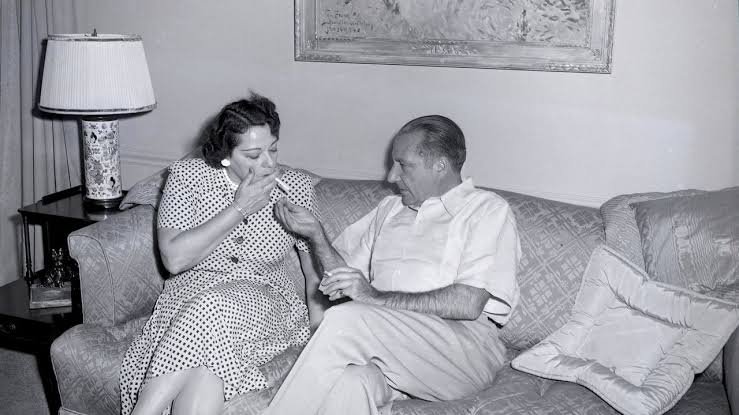
Lauretta Giegerman is a name that may not readily appear in the annals of fame, yet her life was connected to notable figures and events through marriage and social interactions. Known primarily through her marriage to Frank Costello, a prominent figure in organized crime, Lauretta maintained a private life away from the spotlight. Despite her limited public appearances, her identity and associations have been subjects of interest due to her connections and the era she lived in. Her story is not just about her as an individual, but also about the intersection of personal lives and public perceptions during a time steeped in notoriety.
Early Life and Background
Lauretta Giegerman was born on October 28, 1894, in New York County, a bustling heart of diverse cultural experiences. Her parents, Jacob H. Geigerman and Cecelia Josephs, provided her with a formative environment, typical of many families in the area during that period. The early 20th century in New York was characterized by massive changes, both socially and economically, and Lauretta’s upbringing in such a dynamic city shaped much of her early worldview. Understanding her early life offers insights into how familial and societal influences may have impacted her decisions and life path.
Marriage to Frank Costello
Lauretta’s marriage to Frank Costello, born Francesco Castiglia, in 1914 marked a significant transition in her life. Costello was a well-known mob boss, whose activities and influence in organized crime brought a unique set of challenges and public attention to their relationship. Despite this, Lauretta maintained a distinct persona, understood largely through her choice to lead a private life amidst her husband’s public notoriety. The marriage lasted several decades and, through it, she navigated the complexities of being associated with one of the most infamous figures of her time. Her role as Costello’s wife was often commented on, yet little was truly known about her beyond this relationship.
Transition from Showgirl to Private Life
Initially, Lauretta Giegerman was known for her role as a showgirl before her marriage. The transition from the vibrant life of a performer to a more secluded existence as the spouse of a mob boss was a significant shift. This change required deliberate efforts to maintain privacy, reflecting a conscious choice to step away from a public career into a role defined by discretion and contemplation. The skills obtained as a showgirl might have played a part in how she managed public appearances later, always ensuring a degree of separation from the criminal activities surrounding her family life.
Public Appearances and Media Depiction
Despite her preference for privacy, there were moments Lauretta appeared in public, most notably documented in a 1957 press photo with Costello after he was treated for a gunshot wound. Such images fortified her identity as Costello’s spouse in the public eye, fostering media interest in her life. The media often portrayed her in the context of her husband’s activities rather than as an individual, emphasizing the challenges anyone faces when linked to a public figure. The depiction of Lauretta in this manner serves as a reminder of how media narratives can overshadow personal stories in favor of public intrigue.
Genealogical and Historical Records
Efforts to construct accurate historical profiles often rely on variable sources, and this is true for Lauretta Giegerman. Her identity and the critical events of her life are confirmed through reliable genealogical records, though discrepancies remain in documentation about her name and specific details. Variations in spelling, such as Giegerman or Geigerman, alongside different accounts of personal events, showcase the challenges historians and researchers face. Source reliability checks become essential in compiling a comprehensive profile, encouraging those interested to consider multiple perspectives when exploring historical records.
Later Life and Legacy
Piecing together Lauretta Giegerman’s later years presents challenges due to conflicting records and repeated information across online biographies. Her ongoing legacy is intricately tied to her marriage with Frank Costello, leaving behind a narrative explored mostly in conjunction with his influence. It is through these associations that her life continues to be examined, often overshadowing her personal contributions and experiences. Understanding her story requires critical attention to both the recorded facts and the gaps in data that persist with historical profiles of individuals from similarly complex backgrounds.
Conclusion
Lauretta Giegerman’s life was shaped by the major events and relationships she experienced, particularly her marriage to Frank Costello. While certain details about her are clear, significant gaps remain, often filled by assumptions based on her association with her husband. Her limited public visibility means her historical profile is defined more by connection than by personal narrative, reflecting broader societal tendencies to link individuals with their more prominent partners. Acknowledging these verified components of her story while also addressing the uncertainties encourages a more nuanced understanding of her life.
Potential Further Research
For those interested in diving deeper into the life of Lauretta Giegerman, a clean fact sheet may provide a refined understanding of her personal history and public identity. Considering a source reliability check for available records is beneficial, ensuring that any research conducted rests on a solid foundation of verified information. Readers are encouraged to explore genealogical databases, historical records, and contemporary accounts to piece together her story, understanding how various narratives are constructed. If interested, consider consulting a professional to guide you through the process, helping to ensure that your conclusions are grounded in accurate and comprehensive research.
Read This: