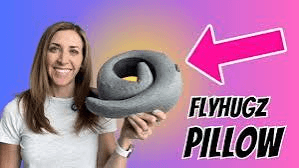
If you found this article after seeing a Flyhugz ad on Instagram or Facebook, you are not alone. Many shoppers are now searching for honest information about this brand before buying — and what they find is a mix of scam warnings, low trust scores, and conflicting reviews.
That raises a fair question: is Flyhugz still a functioning business, or is it quietly heading toward collapse?
This article covers what Flyhugz actually sells, whether the company is still operating, what review sites and customers say, what the red flags mean, and what to do if you have already placed an order.
What Flyhugz Is and What It Sells
Flyhugz (flyhugz.com) is an online retailer selling the FlyHugz travel pillow. The product is marketed as a solution for neck pain and discomfort during travel, particularly on planes.
The brand uses social media advertising heavily — primarily Instagram and Facebook — to drive traffic directly to its website. It follows a direct-to-consumer model, meaning there is no major retail store carrying the product.
On its FAQ page, Flyhugz lists a US-based address: 443 Broadway, New York, NY 10013. It also publishes an email address (Support@FlyHugz.com), a phone number (+1 938-902-3331), and operating hours of Monday through Friday, 8am to 6pm.
Is Flyhugz Still in Operation?
As of the most recent check, the flyhugz.com website is accessible. Product pages are live, and the FAQ and contact page are still up with current information. There is no official closure notice, bankruptcy filing, or public shutdown announcement.
That said, a live website does not automatically mean a business is fully functional. It simply means no confirmed closure has occurred.
It is worth understanding the difference between a business that has formally shut down and one that is struggling. A formally closed business would typically have an inaccessible site, bounced emails, and no social media activity. Flyhugz does not currently show those signs.
However, many small ecommerce brands can become effectively non-responsive — slow shipping, unanswered support tickets, unresolved refunds — without ever making a public announcement. That is the more relevant concern here.
What Trustpilot Reviews Actually Show
Flyhugz holds an “Average” rating of approximately 3.5 out of 5 on Trustpilot. That places it in a middle range — not a strong endorsement, but not a complete collapse either.
Positive reviews mention comfort, neck support, and receiving the product as described. Some customers appear genuinely satisfied with the purchase.
Negative reviews tell a different story. Common complaints include:
- Late or missing shipments
- Perceived low product quality relative to the price
- Difficulty reaching customer support
- Unresolved refund requests
Consider a typical scenario: a buyer sees a Flyhugz ad, checks Trustpilot, and finds both 5-star and 1-star reviews side by side. That pattern suggests the experience varies significantly depending on the customer. Some receive what they ordered without issue. Others report significant problems with delivery or support.
A mixed Trustpilot profile does not confirm a business is fraudulent or closing. It does indicate inconsistent fulfillment and service quality — which is a legitimate concern for any prospective buyer.
Low Trust Scores and the Scam Accusations Explained
Beyond Trustpilot, trust-rating platforms paint a more concerning picture. Scam Detector assigns flyhugz.com a low trust score of approximately 35.7 out of 100.
One reason cited is that the domain registration is privacy-protected through a service called Contact Privacy Inc., with an address listed at 96 Mowat Ave, Ontario, Canada. That conflicts with the New York address published on the Flyhugz website itself.
Privacy-protected domain registration is not automatically a sign of fraud — many legitimate businesses use it. But combined with limited independent brand presence and generic contact details, it contributes to automated risk signals on these platforms.
On social media, the language is sharper. Public Facebook group posts include direct warnings such as “Do not buy — it is a SCAM,” typically from users describing non-delivery or failed attempts to get a refund.
It is important to interpret these signals carefully. A low trust score and angry social posts reflect perceived risk and documented poor experiences. They are not legal proof of fraud, and they are not confirmation that the business has closed. What they do suggest is that a meaningful number of customers have had problematic experiences.
The Address Discrepancy: A Real Concern
The mismatch between the company’s published US address and the Canadian privacy service address associated with its domain registration is worth examining on its own.
Flyhugz presents itself as a US company with a New York street address. But the WHOIS data for the domain points to Contact Privacy Inc. in Ontario, Canada. That inconsistency does not prove the business is dishonest, but it does make independent verification harder.
For a consumer trying to determine whether a business is real and reachable, conflicting address information is a practical obstacle. If a dispute arises and you need to escalate beyond email, knowing who you are actually dealing with matters.
Is Flyhugz Going Out of Business?
Based on available evidence, Flyhugz does not appear to be formally going out of business. There are no credible reports of bankruptcy proceedings, no official closure statements, and the website remains active.
What the evidence does suggest is a business with significant reputation and operational problems. Those are different things, but they are still meaningful for a buyer.
There are a few possible scenarios worth considering:
- Still operating with limited staff: The business may be running with minimal resources, resulting in slow or absent customer support.
- Dropshipping model: If Flyhugz outsources fulfillment to a third party, shipping delays and quality inconsistencies become harder to control and more common.
- Gradual decline: Some small ecommerce brands reach a point where they stop investing in customer service but keep the website running as long as orders come in.
None of these scenarios equal a formal closure. But they do explain the pattern of complaints without requiring the business to be an outright fraud operation.
What to Do If You Have Already Ordered
If you have placed an order with Flyhugz and are concerned, here are practical steps to take.
First, document everything. Save your order confirmation email, any shipping notifications, and every piece of communication with the company. This documentation matters if you need to escalate.
Second, attempt contact through official channels. Try the email and phone number listed on the FAQ page. Keep a record of when you reached out and whether you received a response.
Third, use your payment method’s protections. If you paid by credit card or through PayPal, you have chargeback and dispute options available. If a product does not arrive within a reasonable time frame, or arrives significantly different from what was described, file a dispute with your card issuer or PayPal directly.
Fourth, document the broader pattern. Trustpilot reviews showing similar complaints can support your case when disputing a charge. Your experience is not isolated, and that context can help.
How to Evaluate Similar Ecommerce Brands Before Buying
Flyhugz serves as a useful case study for evaluating any niche product website before placing an order. The following signals, taken together, should prompt caution:
- Privacy-protected WHOIS registration with no verifiable company identity
- Inconsistent or unverifiable contact information
- Heavy reliance on social media ads with minimal independent brand presence
- A large volume of 1-star reviews describing non-delivery or refusal to refund
- Low trust scores on multiple rating platforms
No single factor listed above is definitive. But when several of these signals appear together — as they do with Flyhugz — the combined risk level is higher than with a well-established brand.
Before ordering from any unfamiliar ecommerce site, a quick check on Trustpilot, the Better Business Bureau, and a WHOIS lookup takes less than five minutes and can save a significant amount of frustration. Resources like InPageBusiness can also help consumers understand how to evaluate online businesses before committing to a purchase.
Final Assessment
Flyhugz does not appear to have gone out of business in any formal sense. The website is live, contact details are published, and no shutdown announcement has been made.
However, the evidence points to a business with real operational and reputation concerns. Low trust scores, a Trustpilot rating that leans mixed, complaints about non-delivery and unresponsive support, and an address discrepancy between its website and domain registration records all deserve serious consideration.
For buyers who are risk-averse, exploring travel pillow brands with stronger and more consistent reputations is the more cautious path. For those still interested in Flyhugz, using a credit card or PayPal, setting realistic expectations about delivery timelines, and keeping thorough records of the transaction are the most practical protective steps available.
Read This: