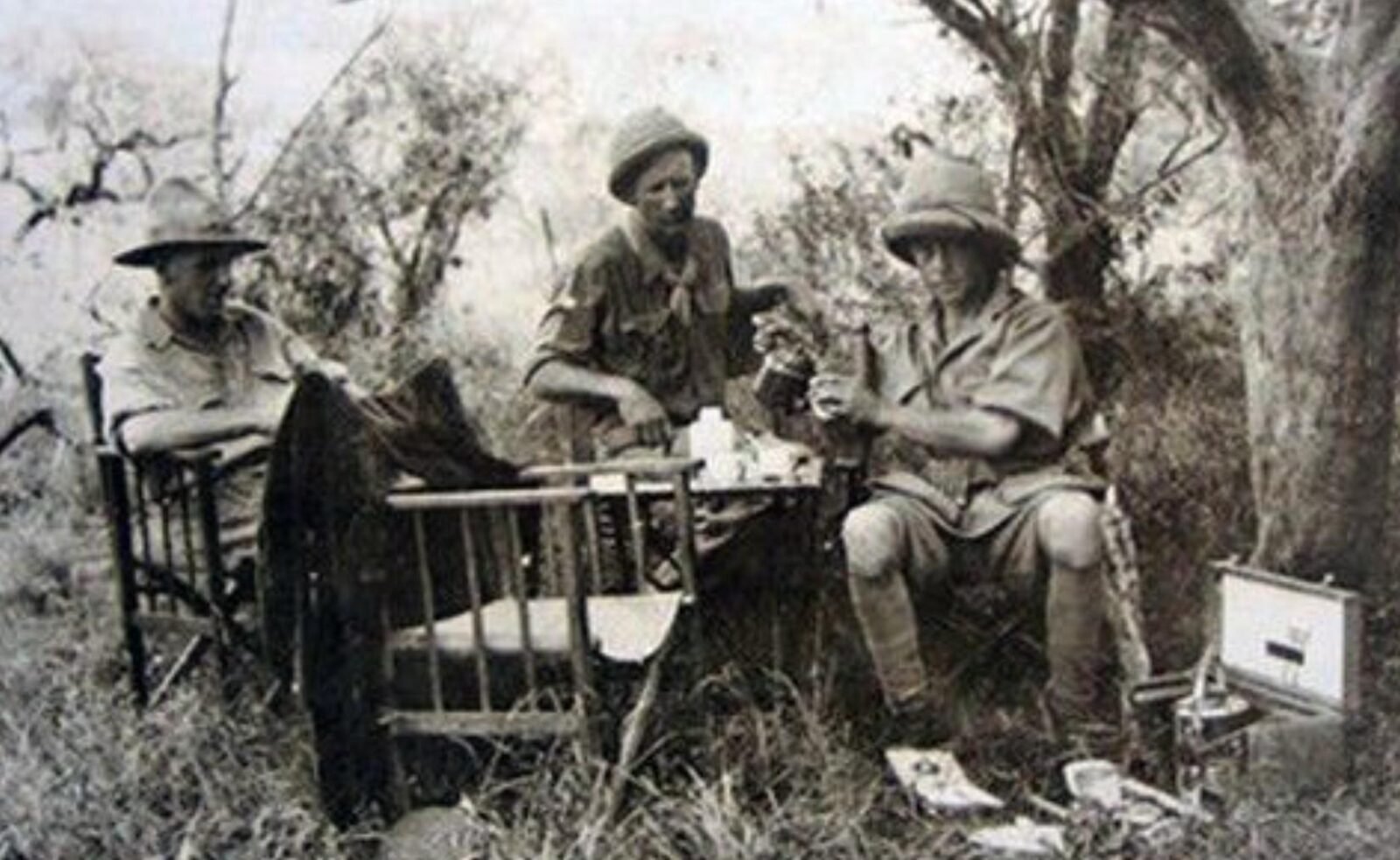
Most people who know the name Bror von Blixen-Finecke came across it through Karen Blixen’s writing or the 1985 film Out of Africa. But the man behind that name had a well-documented life of his own — one that stretched across Swedish and Danish aristocracy, the coffee farms of colonial Kenya, and the early professional safari industry.
This article covers who Bror was, where he came from, his marriage to Karen Blixen, his career in East Africa, and why his name still shows up in genealogy searches and historical databases today.
Who Was Bror von Blixen-Finecke?
Bror Fredrik von Blixen-Finecke was a Swedish baron, professional hunter, safari guide, and writer. His lifespan is most commonly given as 25 July 1886 to 4 March 1946, though some secondary sources note a slightly different birth year. That discrepancy has not been fully resolved by any single authoritative source, so it is worth keeping in mind if you are doing genealogy research.
He is probably best known to general readers as the first husband of Karen Blixen, the Danish author who later wrote under the pen name Isak Dinesen. But Bror was much more than a footnote in someone else’s story.
If you have seen his name written different ways — “Bror Blixen,” “Baron Bror von Blixen-Finecke,” or “Bror Fredrik von Blixen-Finecke” — these all refer to the same person. The different formats appear across genealogy platforms, encyclopedias, and biographical sources, which can make research feel confusing at first.
One detail that often surprises people: Bror was an identical twin. His twin brother was Hans Gustaf von Blixen-Finecke — a name that also connects to Karen Blixen’s story, as explained below.
His Aristocratic Family and the Twin-Brother Connection
Bror came from a well-established noble family with roots in both Sweden and Denmark. His parents were Baron Fredrik von Blixen-Finecke and Countess Clara Krag-Juel-Vind-Frijs. Both sides of his family had significant political and social standing.
His paternal grandfather, Carl Frederik Axel Bror von Blixen-Finecke, held the family’s ancestral seat at Näsbyholm Castle and briefly served as Denmark’s foreign minister in 1859 and 1860. His maternal grandfather, Count Christian Emil Krag-Juel-Vind-Frijs, went further — serving as Denmark’s prime minister from 1865 to 1870.
This ancestry helps explain why Bror’s name keeps appearing across different genealogy databases. His family line connects Swedish nobility, prominent Danish political families, and the broader European aristocratic network — all of which are well-indexed in historical records.
His twin brother, Hans Gustaf, is relevant here too. Karen Blixen had a prior romantic connection to Hans before her relationship with Bror developed. This detail comes up frequently in biographical accounts and is worth noting for genealogy readers tracing how these families overlap. That said, dramatic claims about Karen “marrying the wrong twin” are often stated as colorful fact in popular writing. It is better to treat that framing as a storytelling shortcut rather than a documented historical conclusion.
Marriage to Karen Blixen and the Move to Kenya
Bror married Karen Dinesen — later famous as Isak Dinesen — in 1914. Some accounts describe them as distantly related through European aristocratic networks, which was not unusual among noble families of that era.
Shortly after their marriage, the couple traveled to Kenya, which was then British East Africa. They established a coffee plantation there, and that farm would eventually become the central setting of Karen’s memoir Out of Africa.
It is important to separate the documented history from the literary and cinematic version of events. Out of Africa is a memoir, not a strict biography. It reflects Karen’s perspective and experiences through her literary voice. It should not be read as a detailed, scene-by-scene account of everything Bror said or did.
Their marriage ended in divorce in 1925. The exact circumstances were personal, and the article does not speculate on private motives. What is clear historically is that both Bror and Karen continued their lives in Kenya for a time after the split, and both left significant marks on the colonial East African story of that period.
The Kenya years are worth understanding in their full context. The couple’s coffee farm was part of a broader wave of European colonial settlement in East Africa. That history involves economic exploitation of land and labor, and it deserves acknowledgment alongside the more personal elements of Bror and Karen’s story.
Professional Hunter and Safari Guide
After his marriage ended, Bror continued building his career in Kenya as a professional hunter and safari guide. He became one of the more recognized figures in the colonial-era big-game hunting world.
His client list reportedly included Edward, Prince of Wales, which gives some sense of the social tier his guiding business operated in. For the wealthy and well-connected travelers of the early twentieth century, a safari with an experienced guide like Bror was both a sporting event and a social occasion.
It is worth stepping back from the adventure framing for a moment, though. The safari industry of that era was deeply tied to colonial economic structures. The guides, hunters, and clients who populated that world operated within a system that extracted resources — including wildlife — from land that had been appropriated from African communities. That context belongs in any honest account of Bror’s career.
Within that world, Bror was evidently skilled and sought-after. His reputation as a hunter extended well beyond Kenya’s borders, and his work left a documented trail in both the histories of the safari industry and the biographies of those he guided.
Bror von Blixen-Finecke as a Writer
Bror is not primarily remembered as a literary figure, but he did write. His best-known work is African Hunter, an autobiographical account of his hunting and travel experiences in East Africa. The book offers a first-person view of a world that has since disappeared — the colonial safari scene of the early to mid twentieth century.
Reading it today requires some historical awareness. Like many memoirs of that period, it reflects the attitudes and assumptions of a European man operating in a colonial setting. That does not make it without value as a historical document, but it does mean it should be read critically.
Secondary biographical material, including a book titled The Man Whom Women Loved, has also been written about him. These accounts pull from his life story but are interpretive works rather than primary sources.
Why Genealogy Researchers Search for Bror von Blixen-Finecke
His name surfaces regularly in genealogy searches for several reasons. He sits at the intersection of multiple searchable family lines: Swedish nobility, Danish aristocracy, the Blixen-Finecke family, the Krag-Juel-Vind-Frijs family, and Karen Blixen’s well-documented biography.
If you are researching him through platforms like FamilySearch, MyHeritage, or similar databases, keep a few things in mind:
- Name variants like “Bror Blixen” or “Baron Bror von Blixen-Finecke” all refer to the same person but may appear separately in different records.
- Genealogy profiles are useful starting points, not final answers. Dates and relationships shown in family trees should be verified against archival or institutional sources where possible.
- The birth-year discrepancy mentioned earlier has not been resolved by a single definitive source, so treat any single platform’s date with appropriate caution.
His grandfather’s connection to Näsbyholm Castle and his maternal grandfather’s role as Denmark’s prime minister both appear in historical records, which makes those family links easier to verify than some others. For general research guidance on cross-referencing sources like these, Inpagebusiness offers useful context on evaluating information found online.
Bror von Blixen-Finecke and Out of Africa
Bror is one of the real figures connected to Karen Blixen’s Kenyan years, the period that shaped her memoir and later inspired the well-known film. He should not, however, be presented as the sole or definitive model for every male character in either the book or the movie.
Film adaptations and literary memoirs make interpretive choices. Characters are condensed, relationships are dramatized, and timelines are adjusted for narrative purposes. The documented biographical record of Bror — his dates, career, marriage, and family — is the more reliable foundation for understanding who he actually was.
What is accurate to say is that Bror von Blixen-Finecke was a real historical figure whose life overlapped significantly with one of the most famous women writers of the twentieth century, in one of the most historically complex settings of that era.
A Life Worth Understanding on Its Own Terms
Bror Fredrik von Blixen-Finecke was a Swedish baron born into a family with deep political and aristocratic roots on both sides of his ancestry. He became a professional hunter and safari guide in colonial Kenya, married Karen Blixen, divorced after eleven years, and wrote an autobiographical account of his East African experiences.
His name appears in literary history, genealogy databases, colonial-era African history, and safari industry records. Each of those threads is real and documented.
He is worth knowing about not just because of who he married, but because his life touched several distinct and historically significant worlds — and left enough of a record that researchers, readers, and family historians can still trace the outline of that life today.
Read This: